Side-blown flute combi – Bainbridge, Hastrick, Goulding, Wheatstone
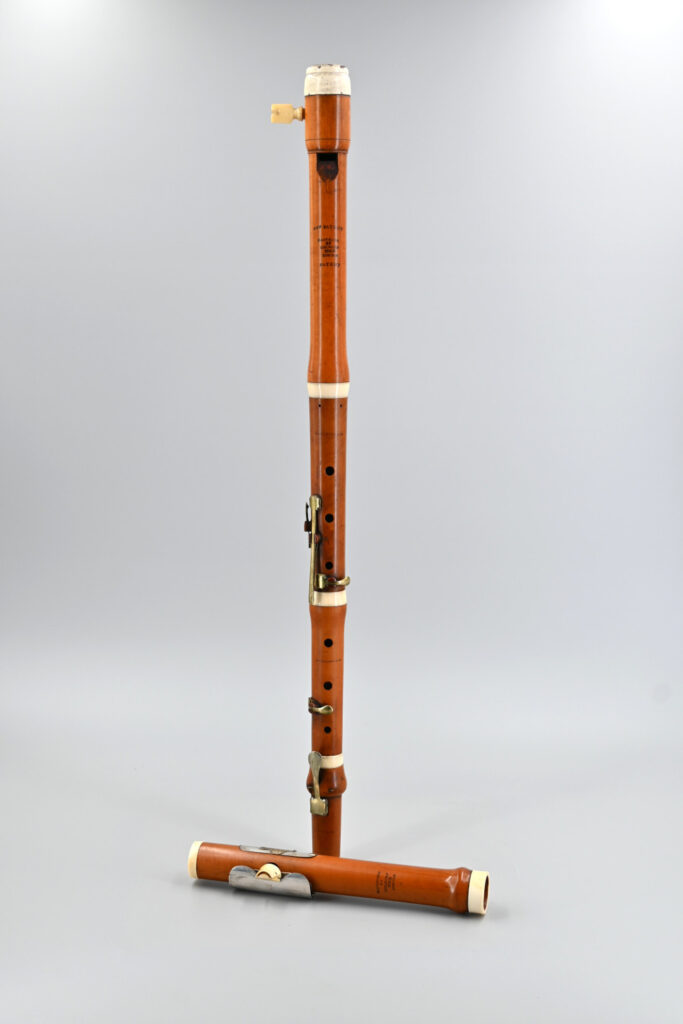
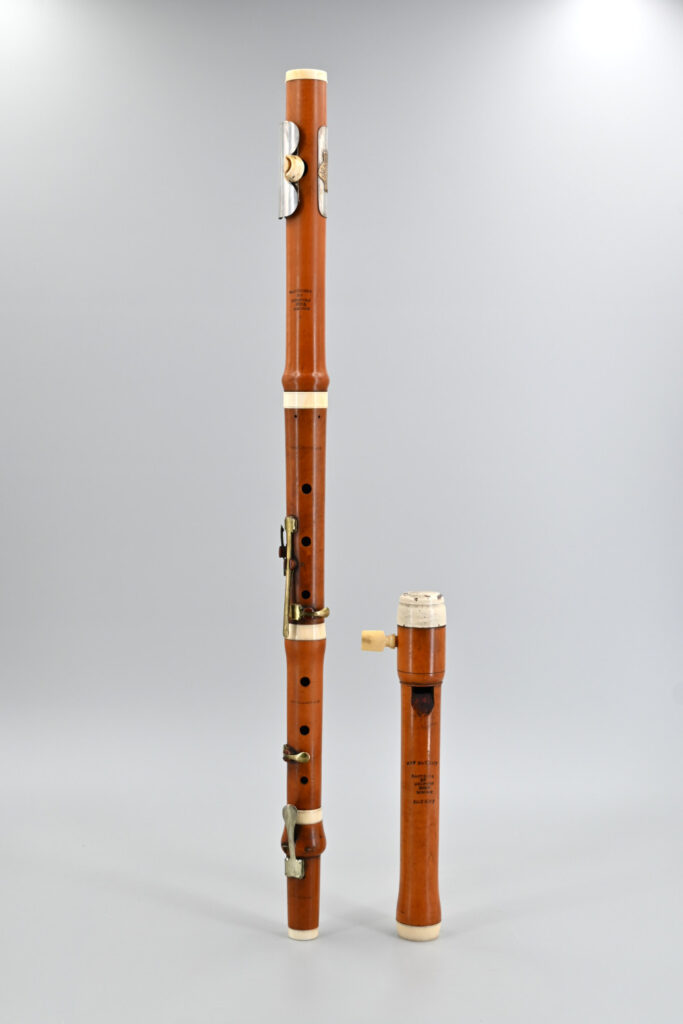
This instrument certainly needs some explaining! It came to us as you can see on the photos and was used for music making just how it is!
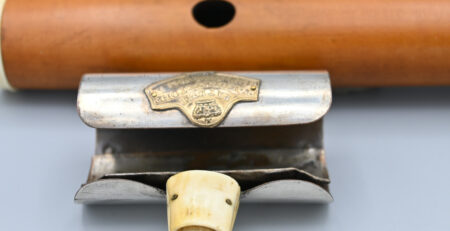
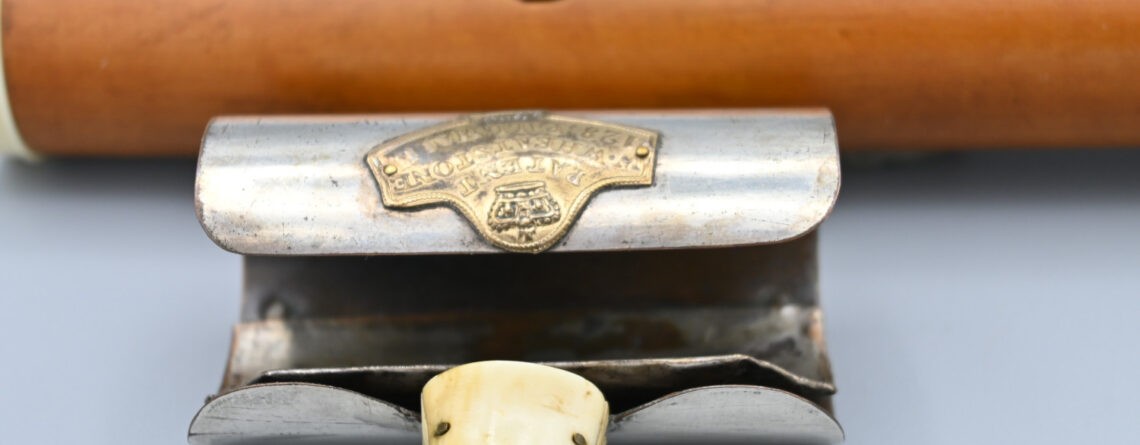
It surely belonged to someone who couldn’t make an embouchure properly to play the flute. Therefore, that person needed to use the W. Wheatstone Embouchure or Mouth-piece or a recorder head joint.
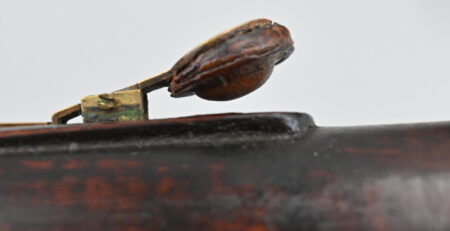
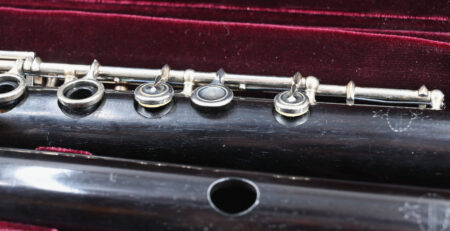
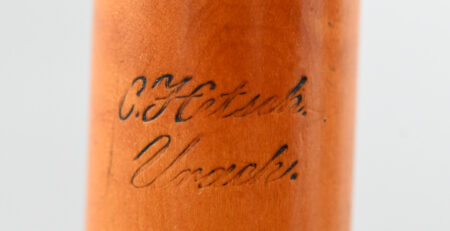
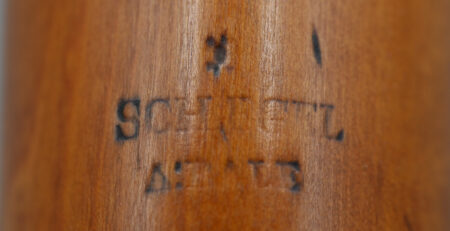
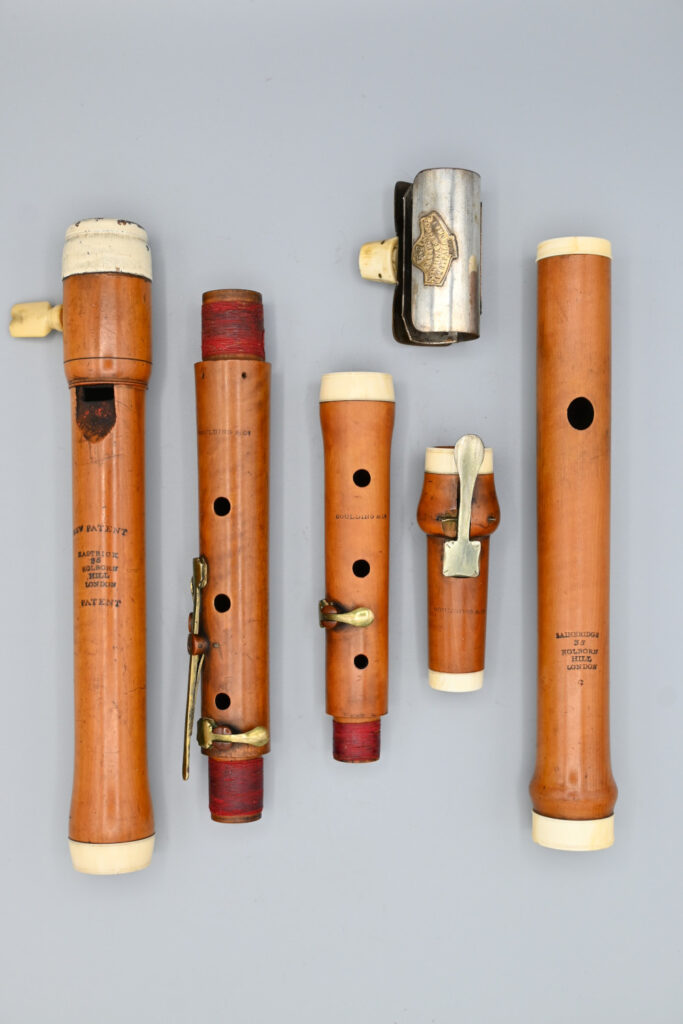
One part of this combi instrument is a boxwood flute by Goulding & Co with four brass keys and one nickel silver key. It’s a typical English flute of the time. Three parts of the flute are stamped Goulding & Co and the head joint was made by Bainbridge. It was originally just a one-key flute and the key was made from nickel silver. Later, four more keys in brass were added in a very special way. The rings and cap were crafted in ivory. It plays at around a=440 Hz. It is nicely made with no visible cracks but needs restoration to be played professionally.
Unfortunately, its owner obviously had problems to play with this instrument set up. So, there were two solutions.
One was the clip-on W. Wheatstone embouchure or mouth-piece, serial number 1980. It is fitted onto the head joint and a spring mechanism channels the breath into the instrument. This means that the player can adjust or focus the air to the edge of the embouchure.
The second solution was a side-blown head joint with a recorder or flageolet mouth-piece. This was made by Hastrick and is another attempt to achieve a working embouchure. Even though this Hastrick head joint sits a bit loose on the body of the Goulding & Co flute, we can confirm that it was played as an ensemble. The screw cap is made of wood which was painted white! It really does sound like a recorder and also plays at around a=440 Hz. We could say that it is basically a recorder head joint to use on a flute.
This flute and recorder combined is a highly collectable item. All in all it is in good condition. It could be used to demonstrate the attempts of years gone by to get people playing music even though they couldn’t make a proper embouchure. We think it was made around 1830 and needs restoring.
It’s a fabulous and unusual combi instrument.