Romantic flute – LINTNER, Georg Leonhard
This remarkable and rare flute was created by George Leonhard LINTNER (1794-1859), who received training and licensing as a maker of both brass and woodwind instruments – quite unusual for the time. He worked alongside his father, Johann Georg LINTNER, who came from Tyrnau in Slovakia, in their hometown of Augsburg, Bavaria, Germany. His father was a well-known brass instrument maker, and they agreed that to eliminate competition, Leonard should concentrate on making woodwind instruments.
So, they had a workshop together, and Leonhard’s instruments received high praise. For instance, he was awarded a prize for one of his clarinets. Unfortunately, he had a falling out with his father and faced difficulties in his marriage, even converting to Protestantism to obtain a divorce and remarry. He relocated to a different town named Neu-Ulm but eventually returned. There appeared to be considerable strife, particularly with his second wife, Barbara Lintner (née Staudenmayer), who accused him of abuse, yet she was unable to secure a separation. Following Leonard’s death in 1864, Barbara, who took over the business, gave up the licence to manufacture instruments, packed her belongings, and departed for San Francisco.
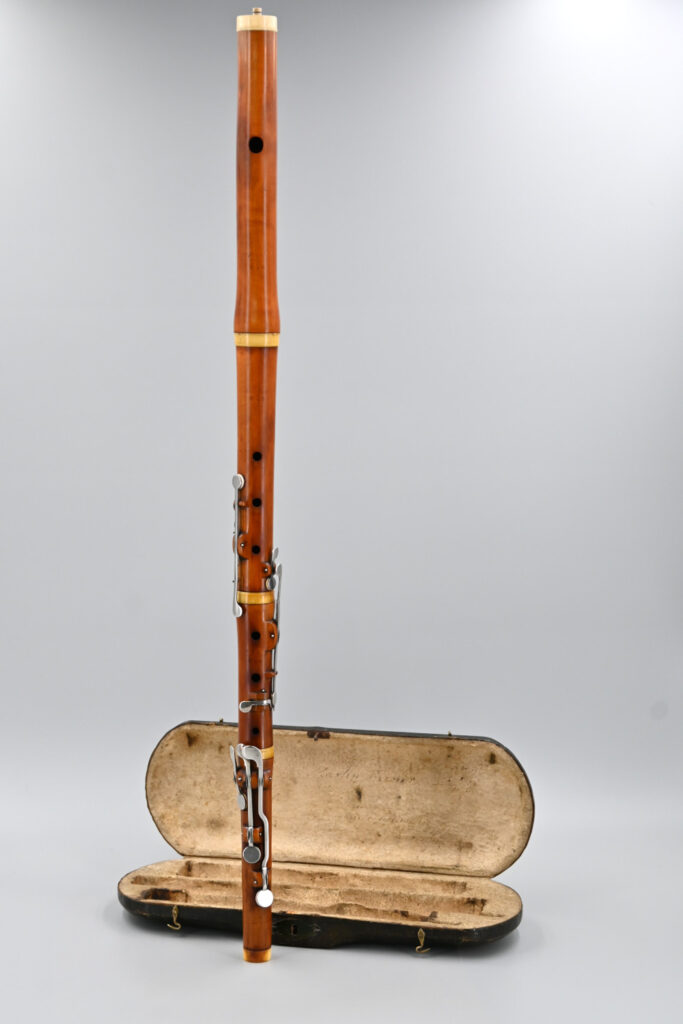
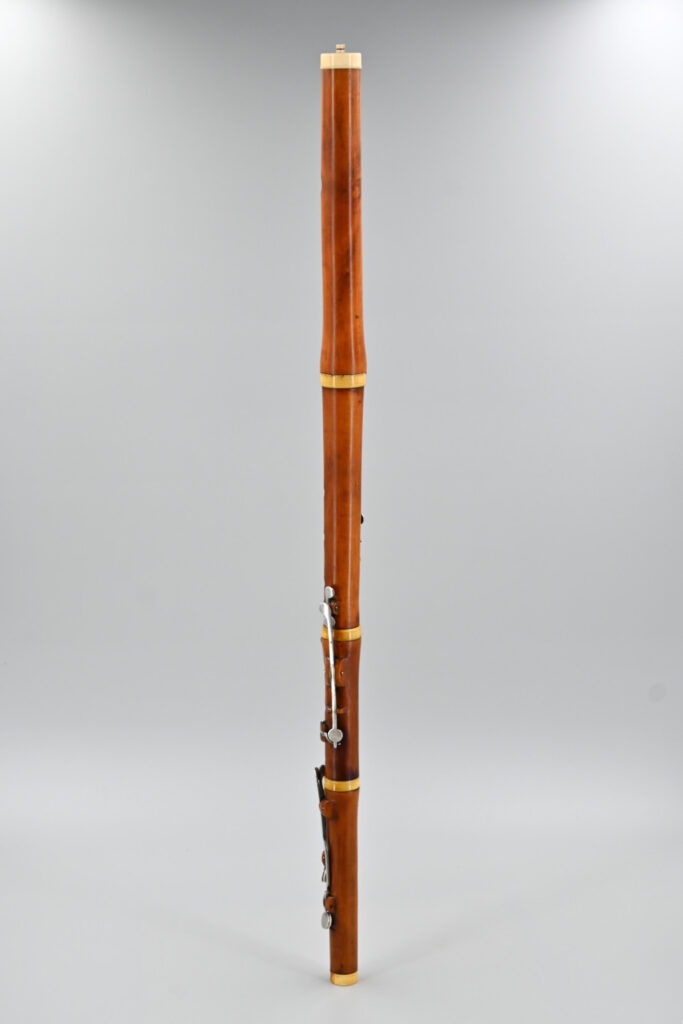
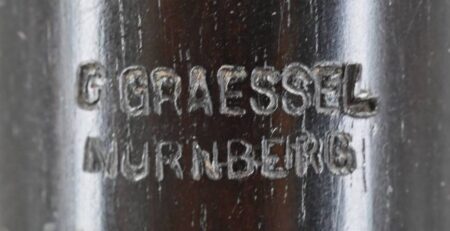
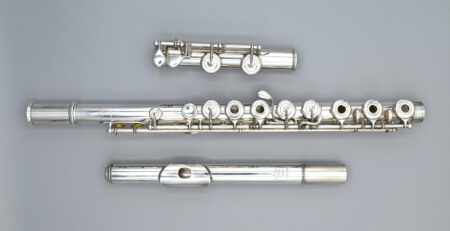
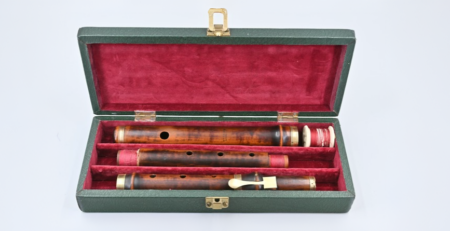
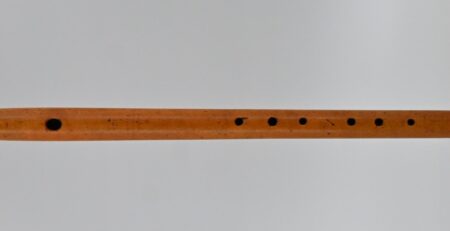
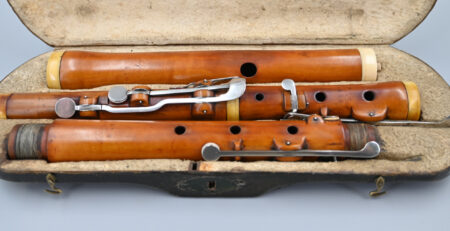
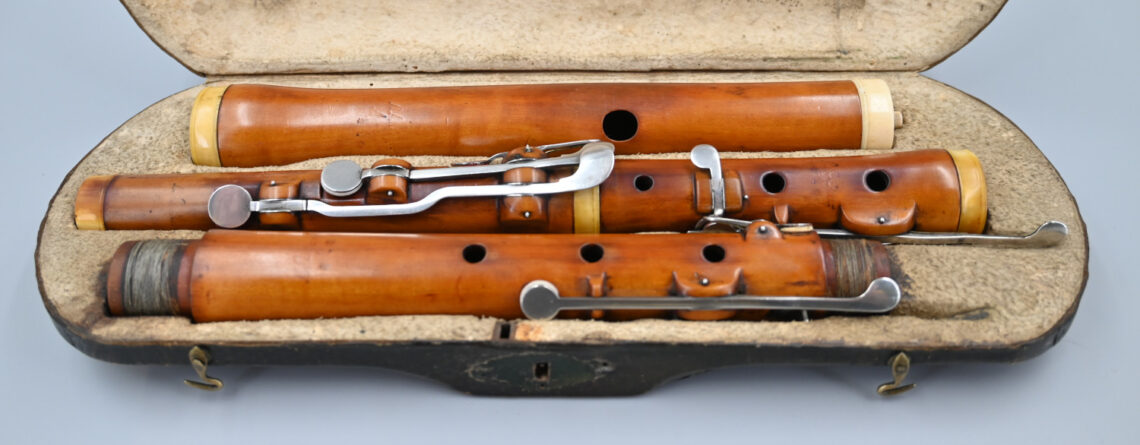
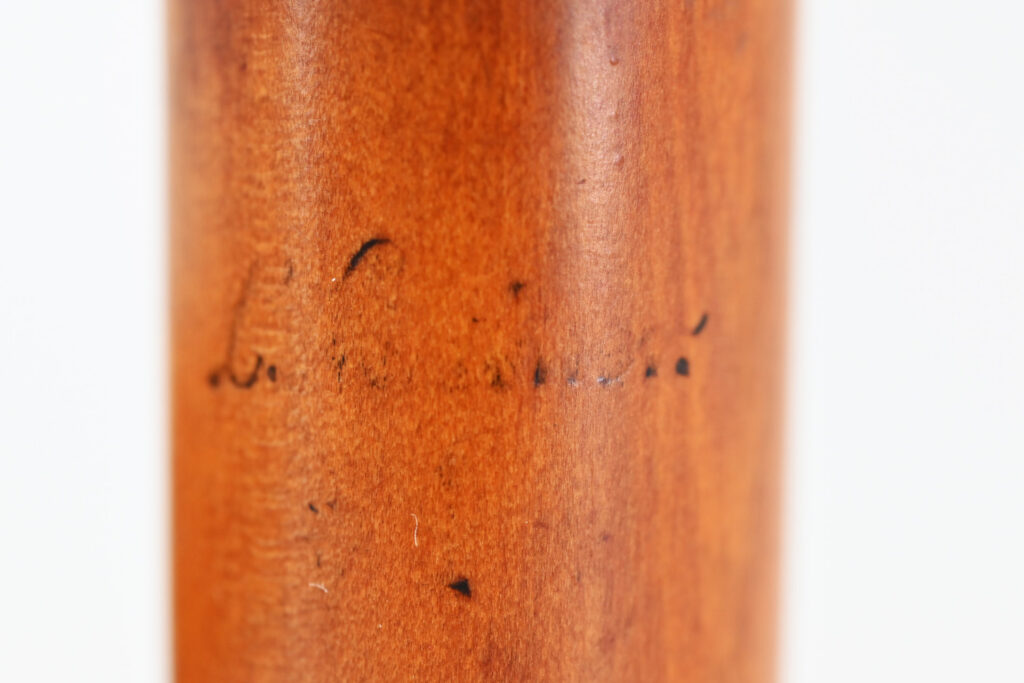
This instrument can be dated to around 1830. The maker’s stamp is present on all four sections of the flute. It is made of boxwood and features solid silver keys which were very elegantly made. The long F-key has a short lever that can open the long F-key – so only one F hole is necessary. The keyholes on the left- and right-hand joints are raised and beautifully carved from the wood. The embouchure is unaltered.
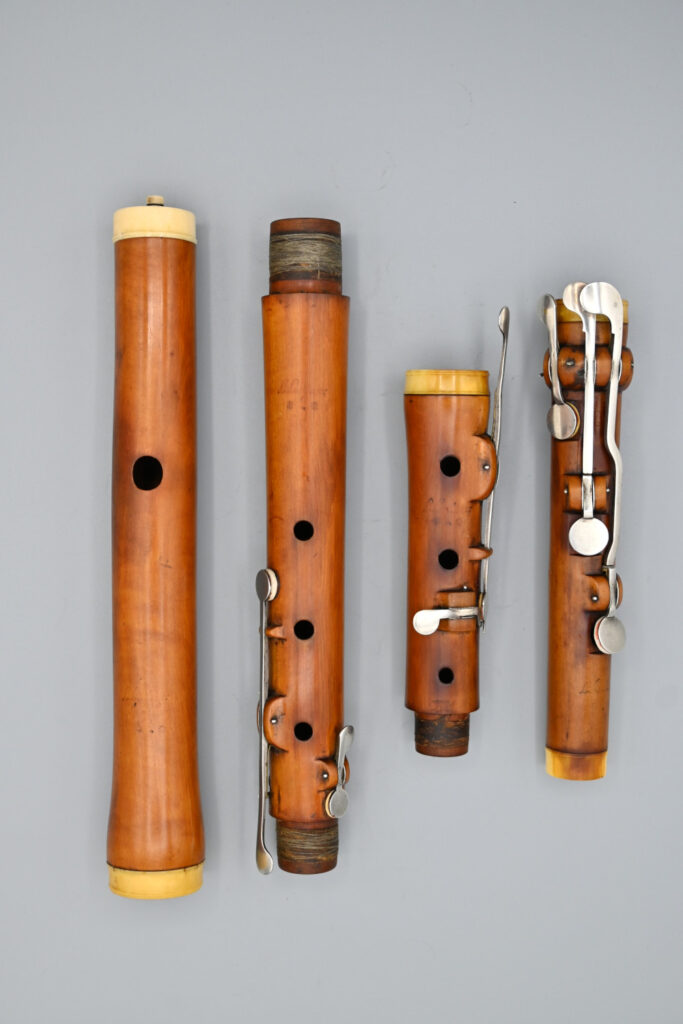
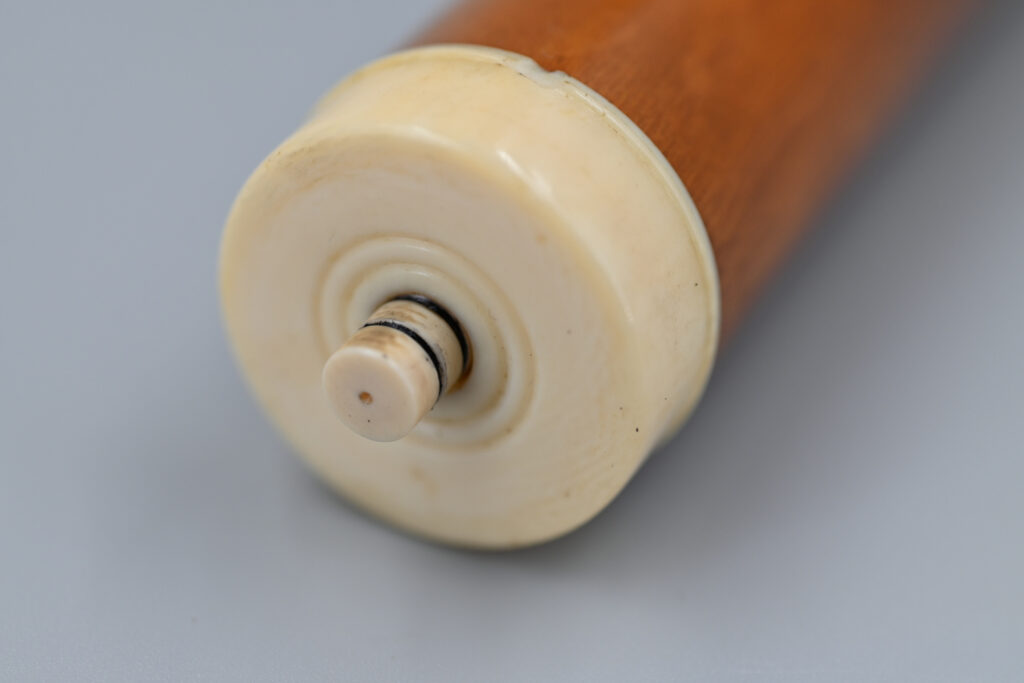
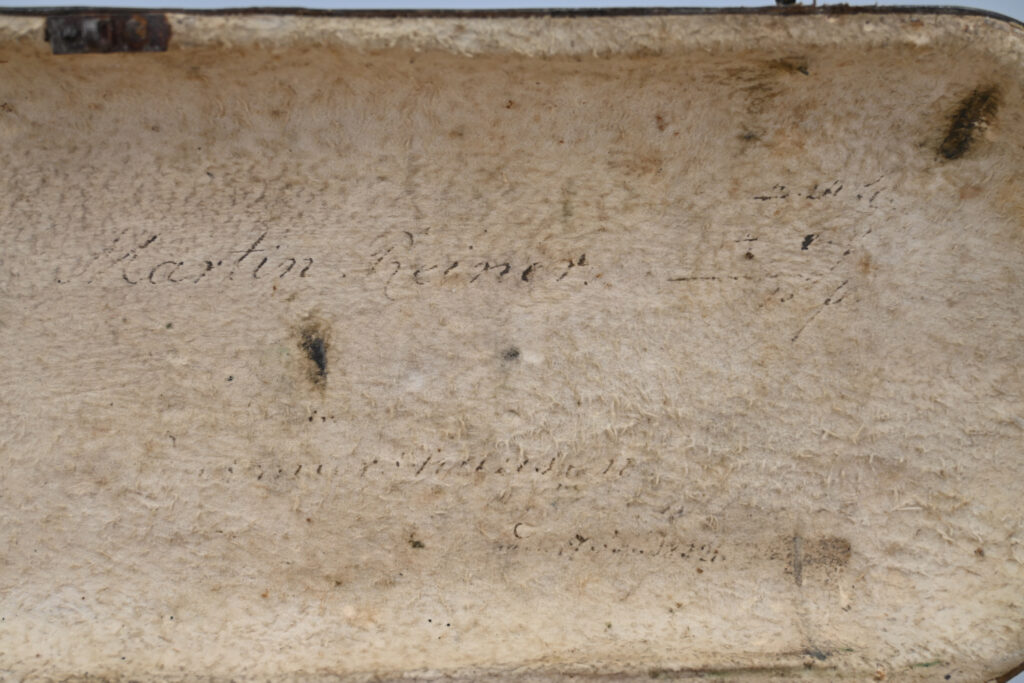
If we look closely, we can see that the right-hand lever for the B-flat key is missing. It was obviously an annoyance for its previous owner. The rings and screw cap are crafted in ivory. The case is in good shape! It even has a date and the name of one of its previous owners written inside – Martin Reiner.
Condition-wise, this Lintner flute is in good condition for its age. It has no visible cracks. It plays at a=442 Hz and the sound is bright-coloured and elegant. It is the perfect go-to instrument for playing Romantic repertoire, such as works by Friedrich KUHLAU (1786-1832) or Franz KROMMER (1759-1831).