Romantic flute – KNOCHENHAUER, August Friedrich Andreas
2.750,00 €
| Category | Flutes |
| Maker | KNOCHENHAUER, August Friedrich Andreas |
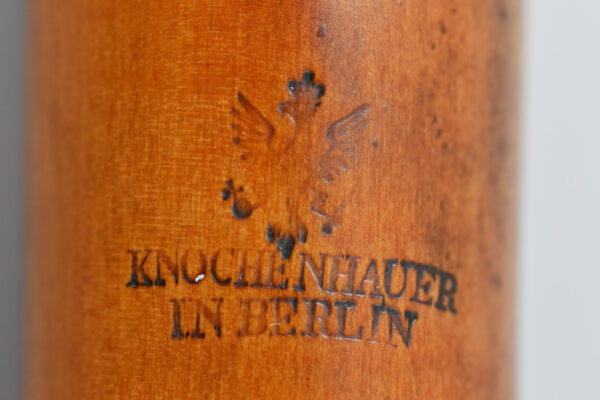
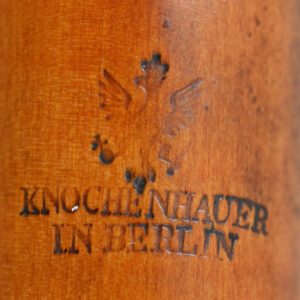
| Marks and inscriptions | [Prussian eagle] / KNOCHENHAUER / IN BERLIN |
| Period | 1830-1900 |
| Place of origin | Berlin, Germany |
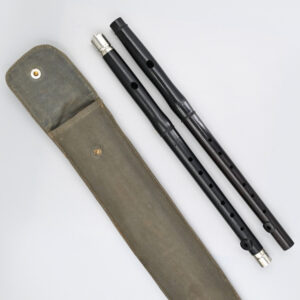
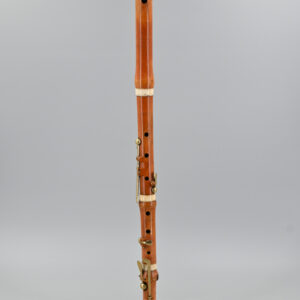
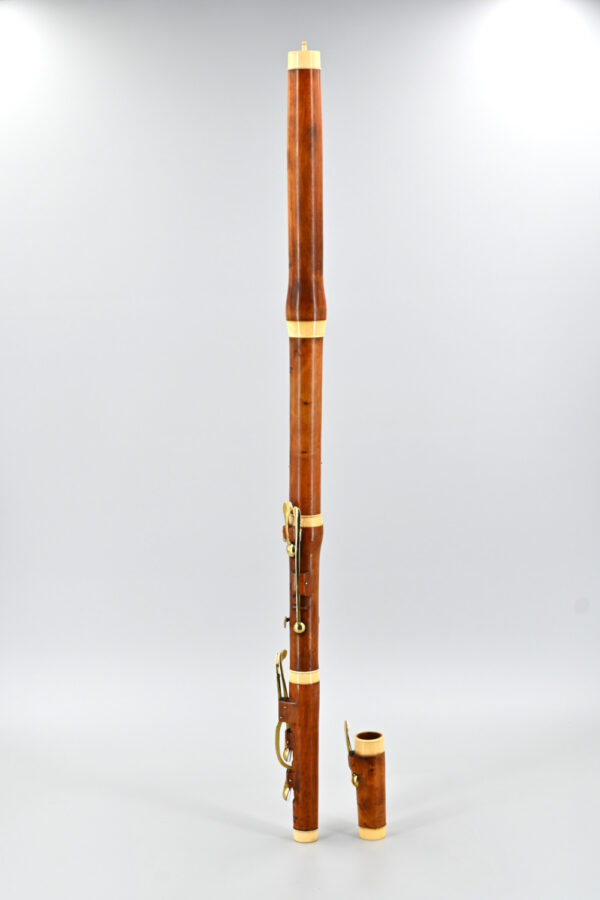
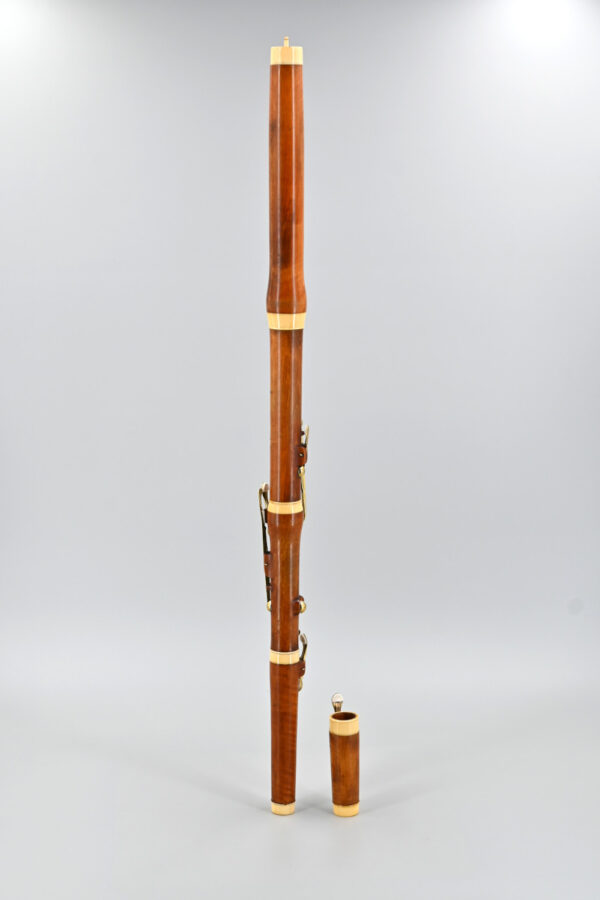
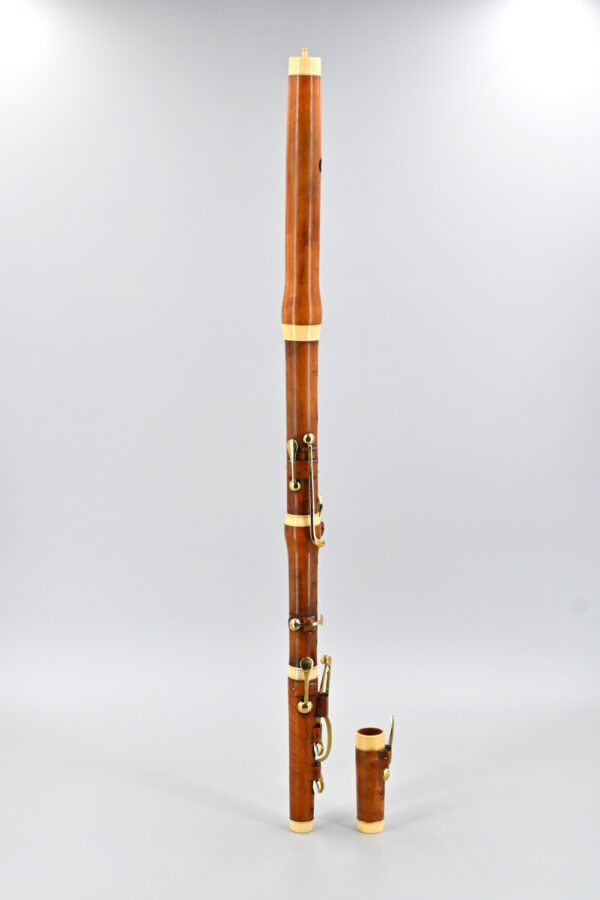
| Description | Romantic boxwood flute by August Friedrich Andreas Knochenhauer |
| Materials | Boxwood, ivory, brass |
| Dimensions | Total length 680/618 mm Sounding length 585/523 mm Weight 351/309 g |
| Condition | Restored, fully functional |
| Special features | C-foot and D-foot |
| Price (€) | €2,750.00 |
| Ref | 1326 |
- Description
- Enquiry
Description
Romantic flute – KNOCHENHAUER, August Friedrich Andreas
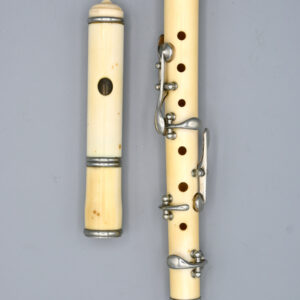
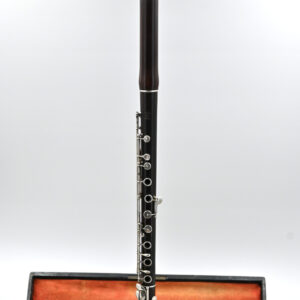
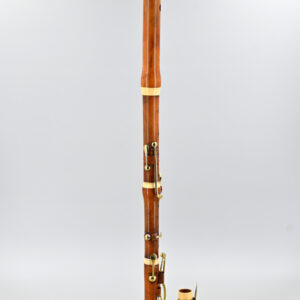
This gorgeous Romantic flute was made in Berlin, Germany, by the August Friedrich Andreas KNOCHENHAUER (1796-1881) workshop.
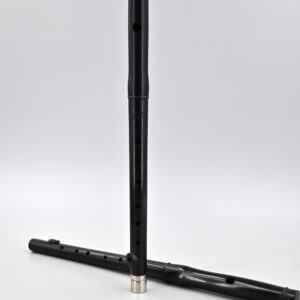
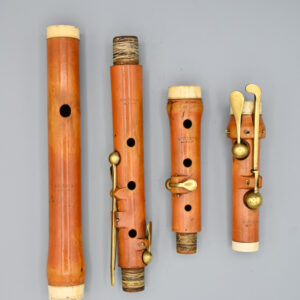
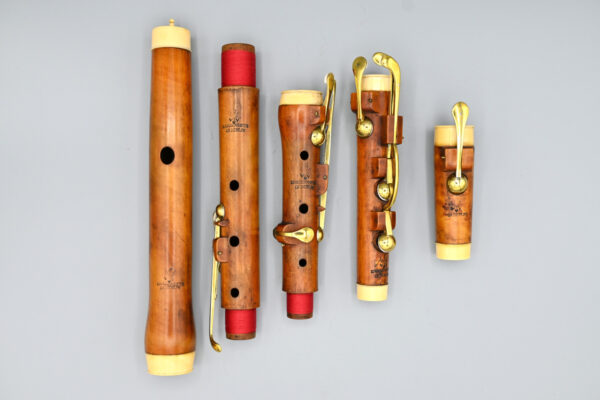
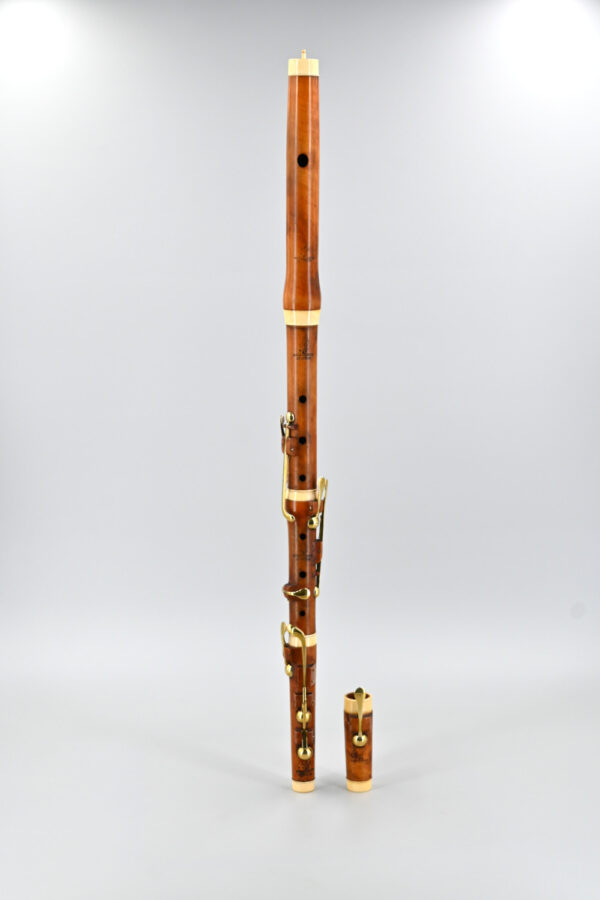
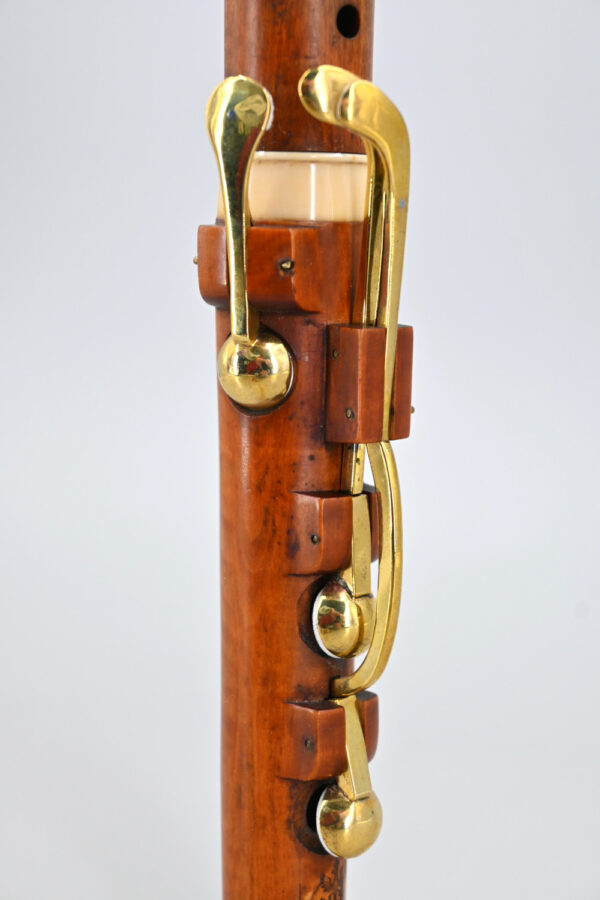
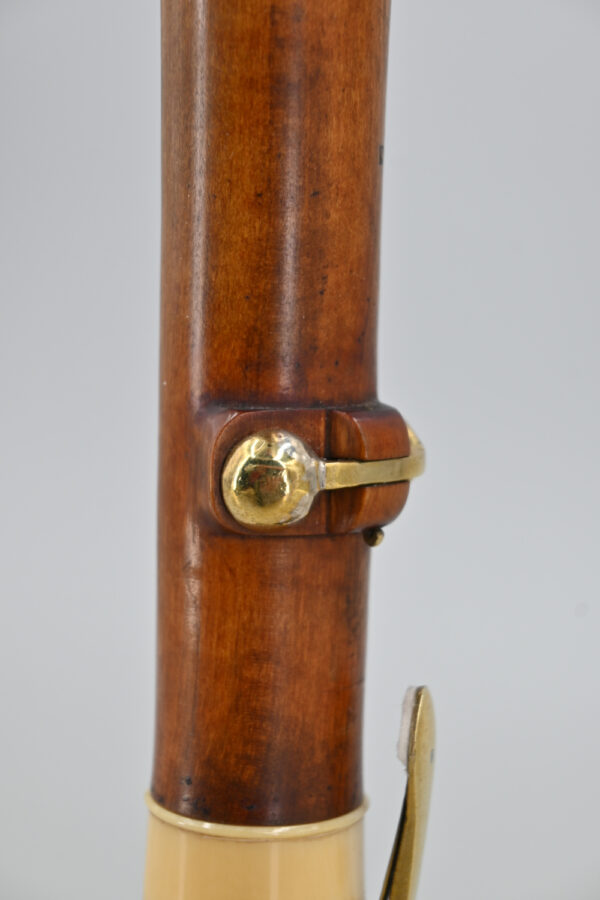
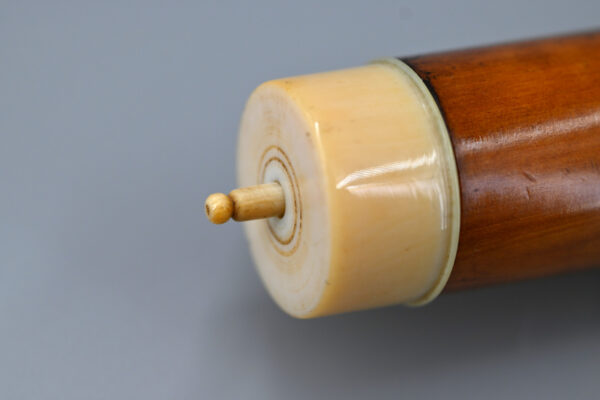
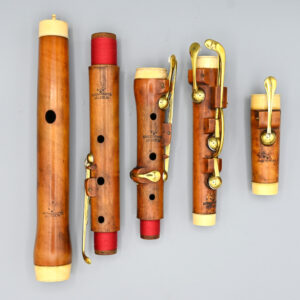
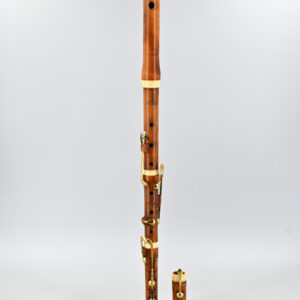
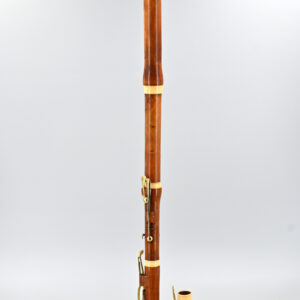
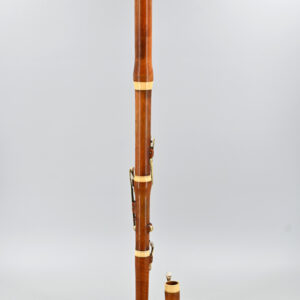
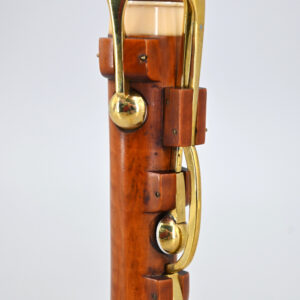
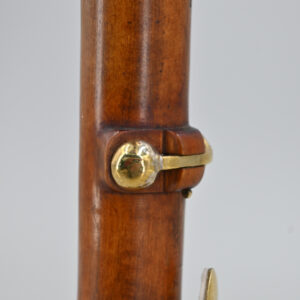
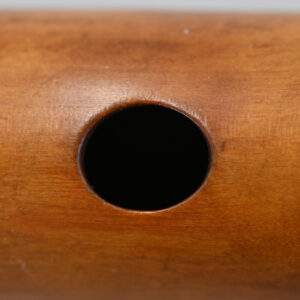
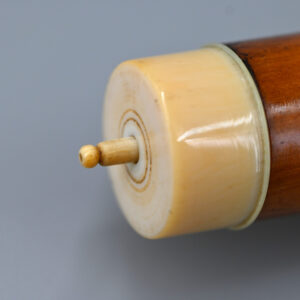
It’s really love at first sight, isn’t it? Just admire the carefully selected boxwood with elegantly carved ivory rings and screw cap plus brass keys. It is very traditionally made in the style of Berlin and Potsdam makers of the time. But that’s not all! The keys are also very special… a bit like English salt-spoon keys. This flute is also rare in that it has not one but two foot joints – a C-foot and a D-foot.
All parts of this flute are stamped. There are no visible cracks. We think it was probably made around 1830.
This Knochenhauer flute was restored by its previous owner and equipped with new pads, felts, tenon windings and cork. The result is that it is fully playable with great intonation at a pitch of around a=444 Hz.
Important note
This instrument contains ivory. A certificate for the legal sale of this instrument within the European Union is supplied when purchased.
show more About the maker…KNOCHENHAUER His somewhat unfortunate surname meant literally “bone hacker”, but was used for the profession of butcher. His father Andreas was a royal master baker in Potsdam. The literature informs us that Knochenhauer was a court wind instrument maker and academic artist. He was born in Potsdam and trained with Griessling & Schlott in Berlin in 1808. He then took part in The German Campaign [Befreiungskriege] as a volunteer hunter. After three years as a journeyman in Dresden, he returned to Berlin in 1819 to work as workshop manager for Johann Wendelin WEISSE (ca. 1780-1864). He established his own workshop in Berlin in 1826. Knochenhauer was appointed “academic artist” by patent of the Berlin Academy of Arts on 8 May 1841 for the excellence of the flutes and clarinets he made and, in some cases, improved. The president of the Berlin Police said of Knochenhauer in 1843 “He runs his business without assistants or apprentices, and therefore on a very small scale. He has no assets, but has nevertheless managed to remain debt-free until now. He is a skilled worker and has a reputation as a man of integrity.” Knochenhauer expanded his business to include brasswind and according to his own ads in 1873, his company, which was founded in 1830 (!), employed 6 people. He died in 1881. One of his sons, Carl Friedrich Rudolph Knochenhauer (1841-1906) was also an instrument maker in his own right, under the name F.A. Knochenhauer. He also dealt in instruments and it seems that he took over his father’s business. show less