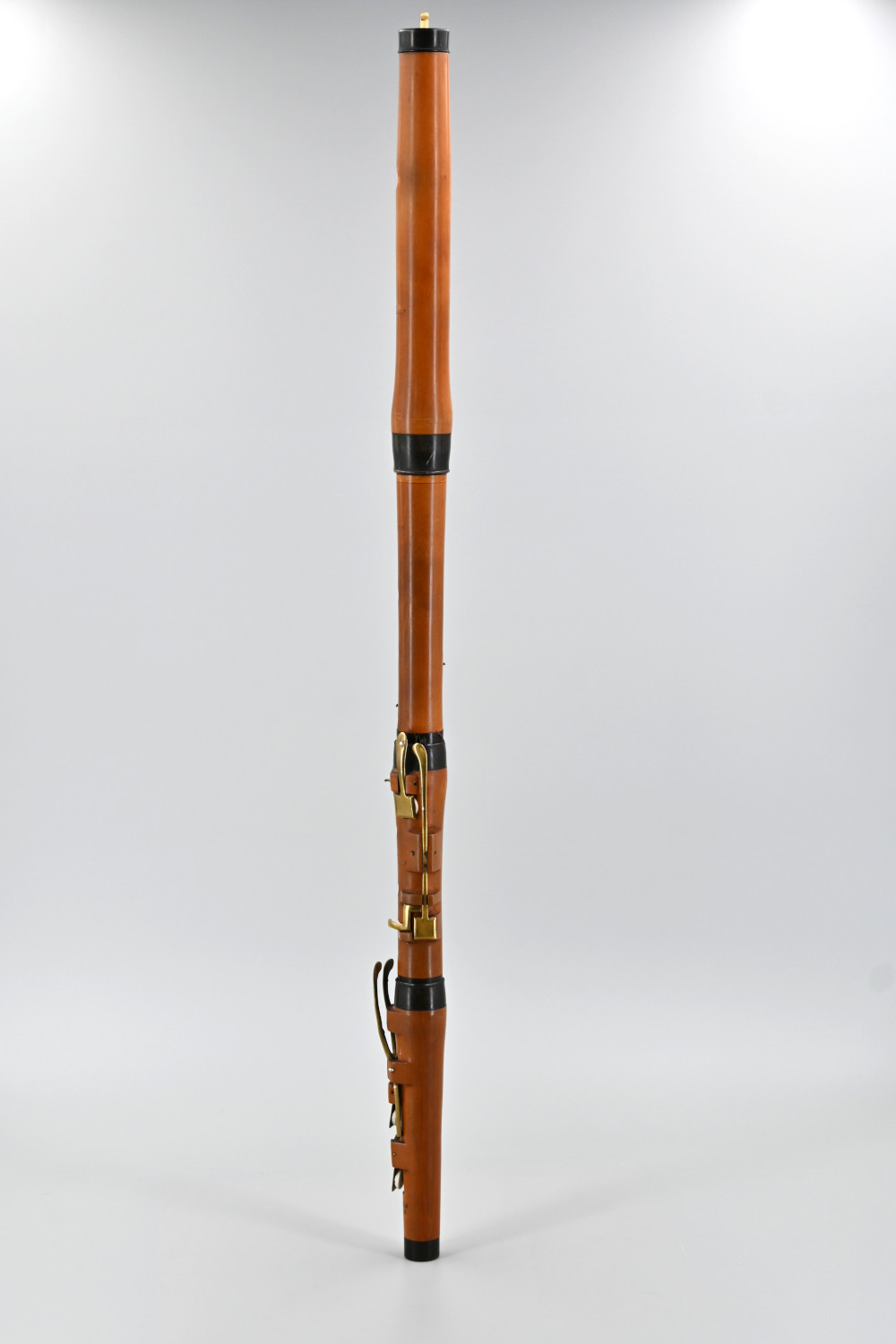
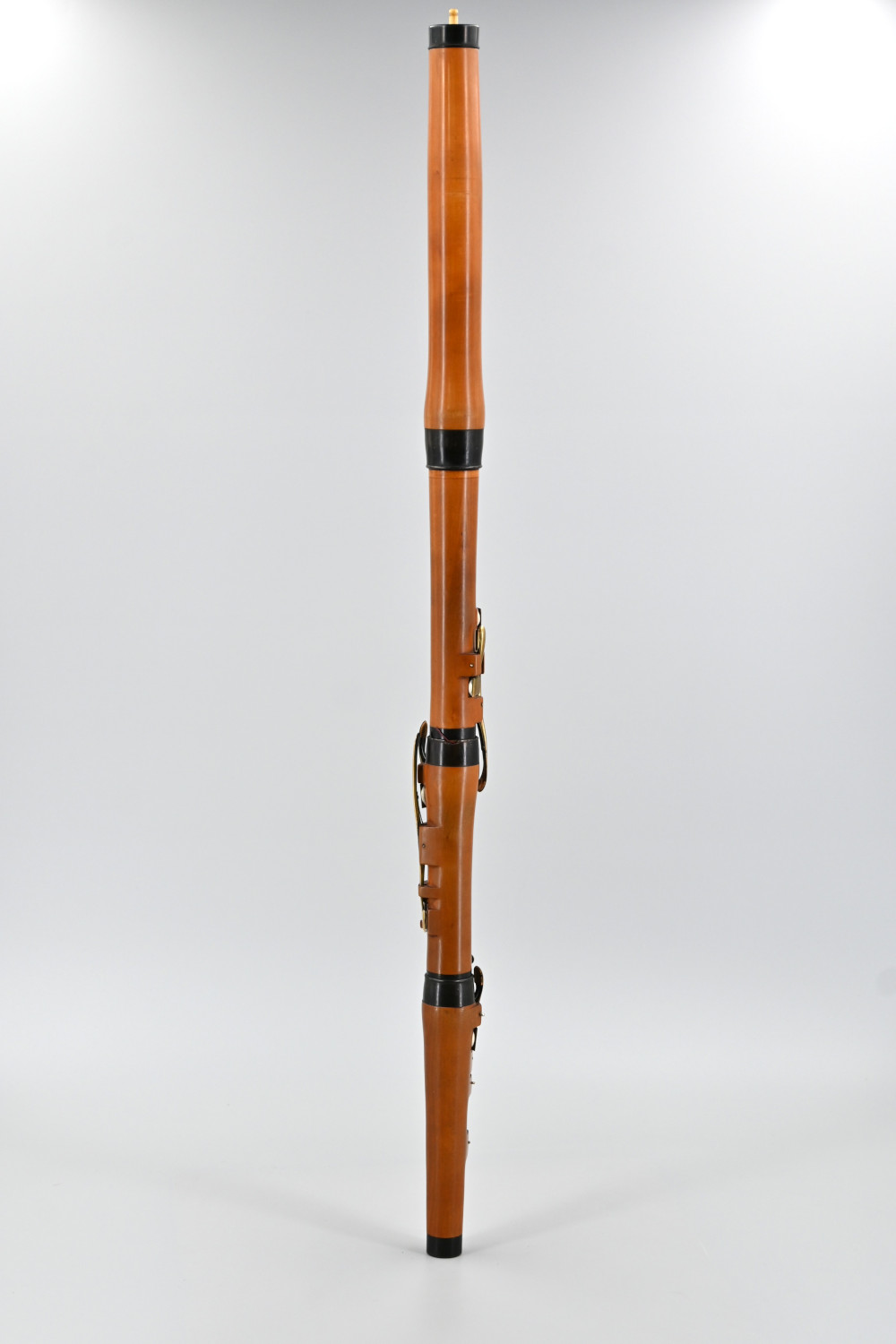
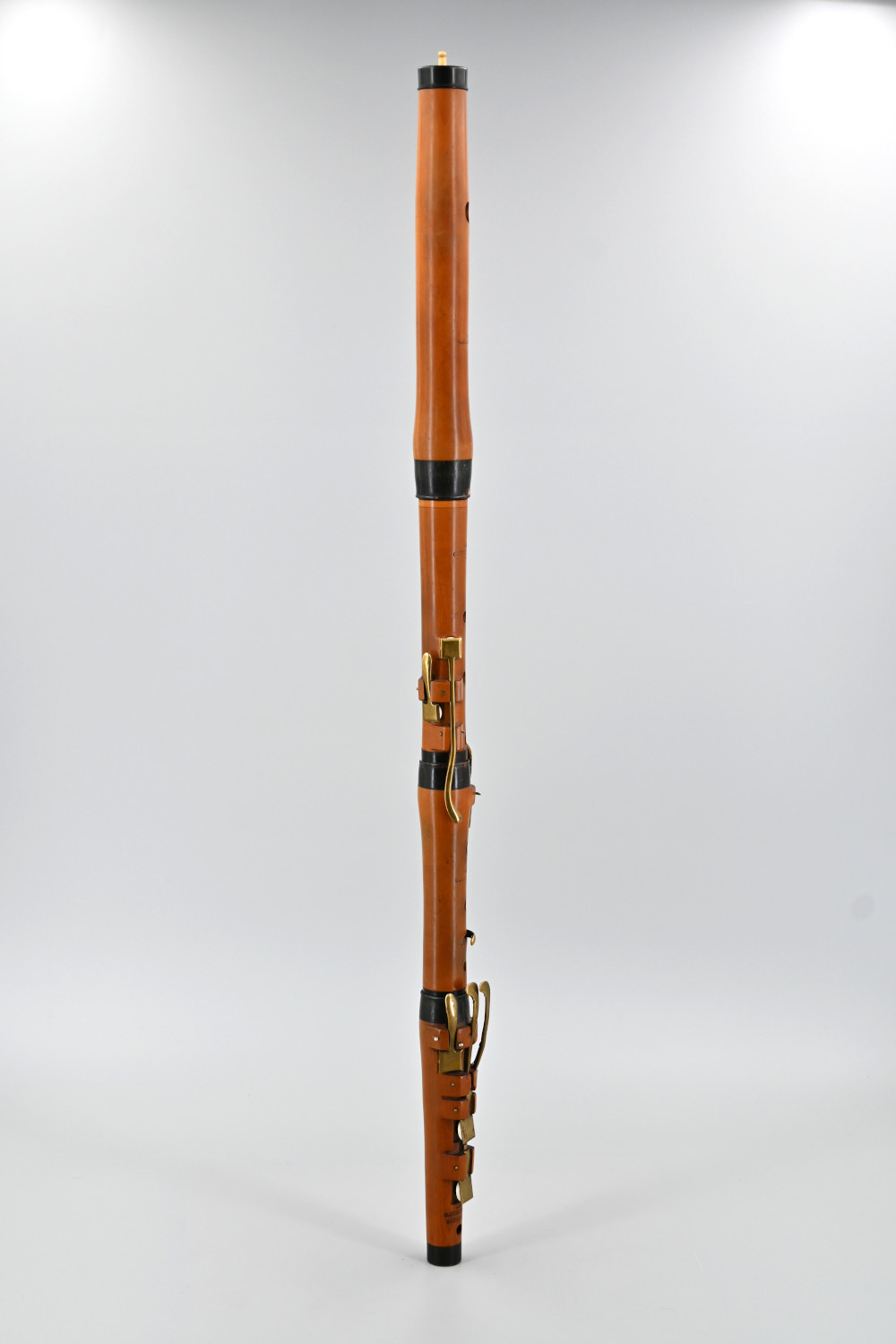
Early Romantic boxwood flute – STREITWOLF, Gottlieb
2.200,00 €
| Category | Flutes |
| Maker | STREITWOLF, Gottlieb |
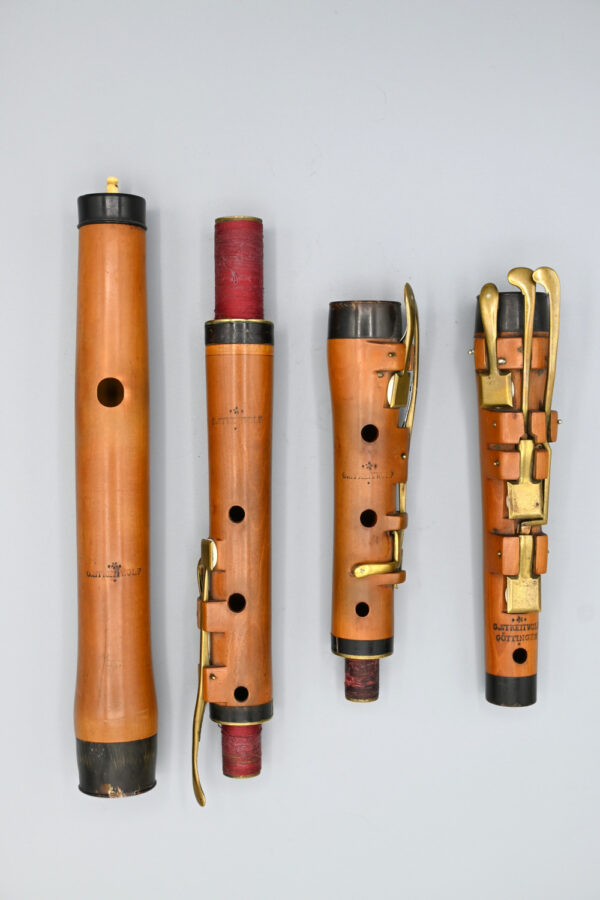
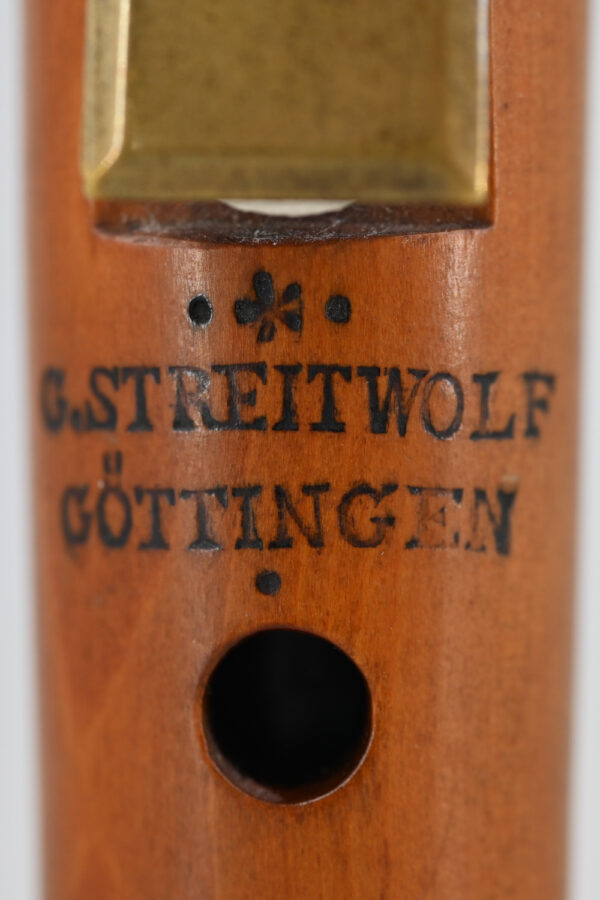
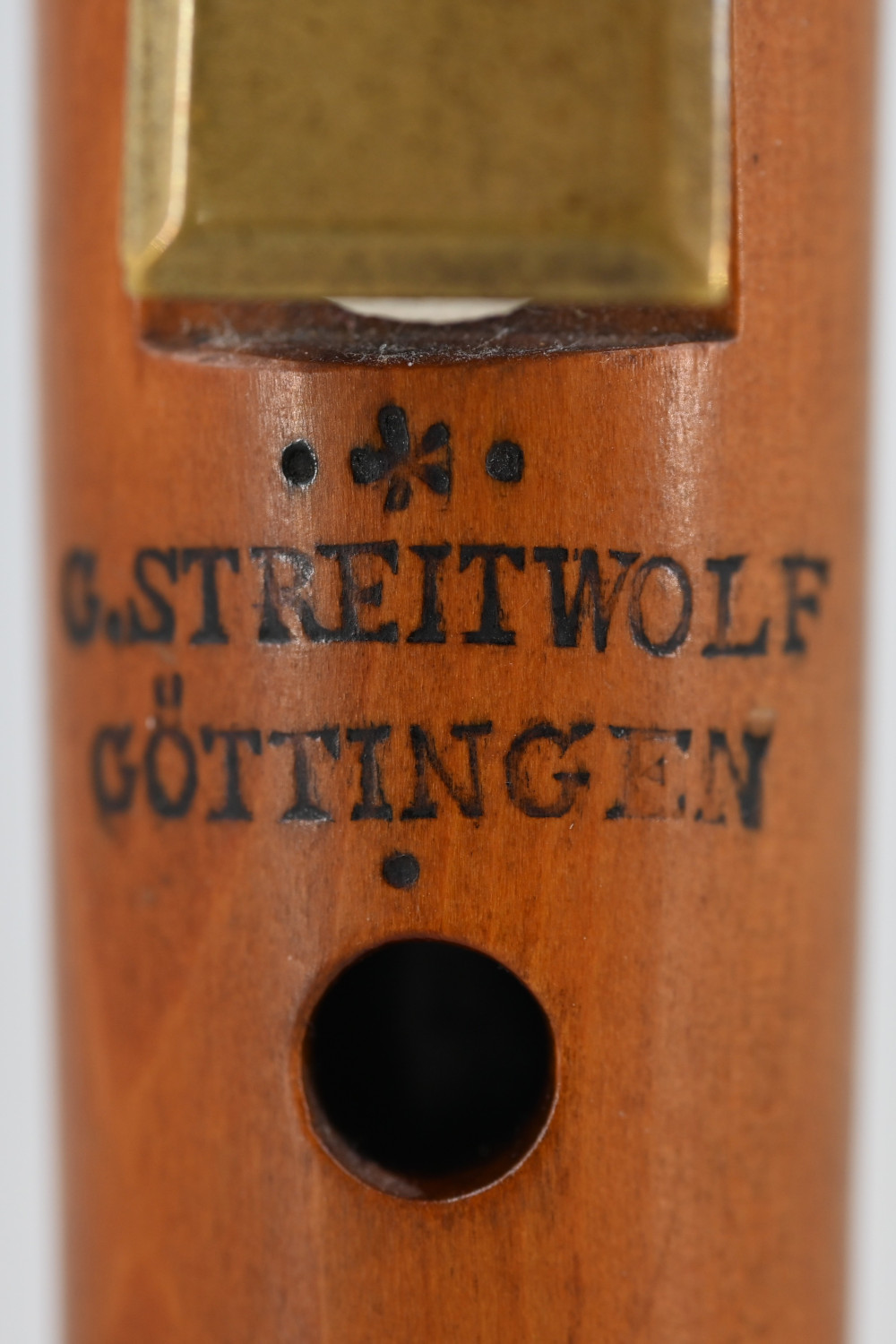
| Marks and inscriptions | On all parts: [five-point star] G. STREITWOLF Additional on foot joint: Göttingen |
| Period | 1750-1830 |
| Place of origin | Göttingen, Germany |
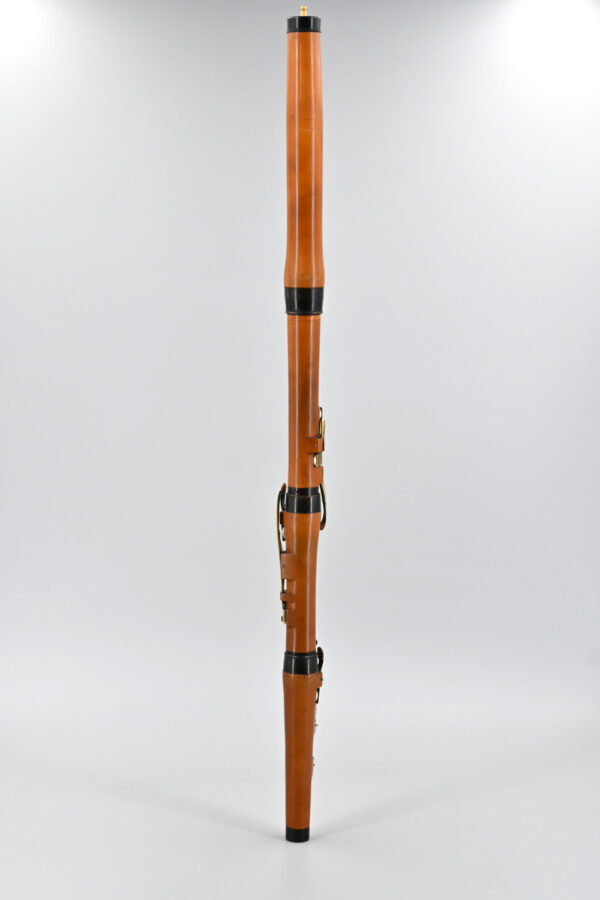
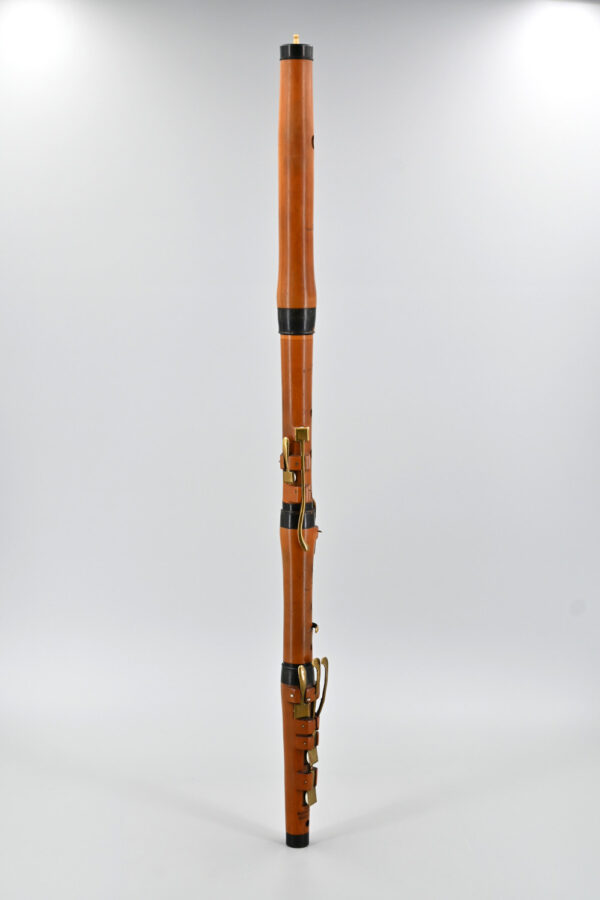
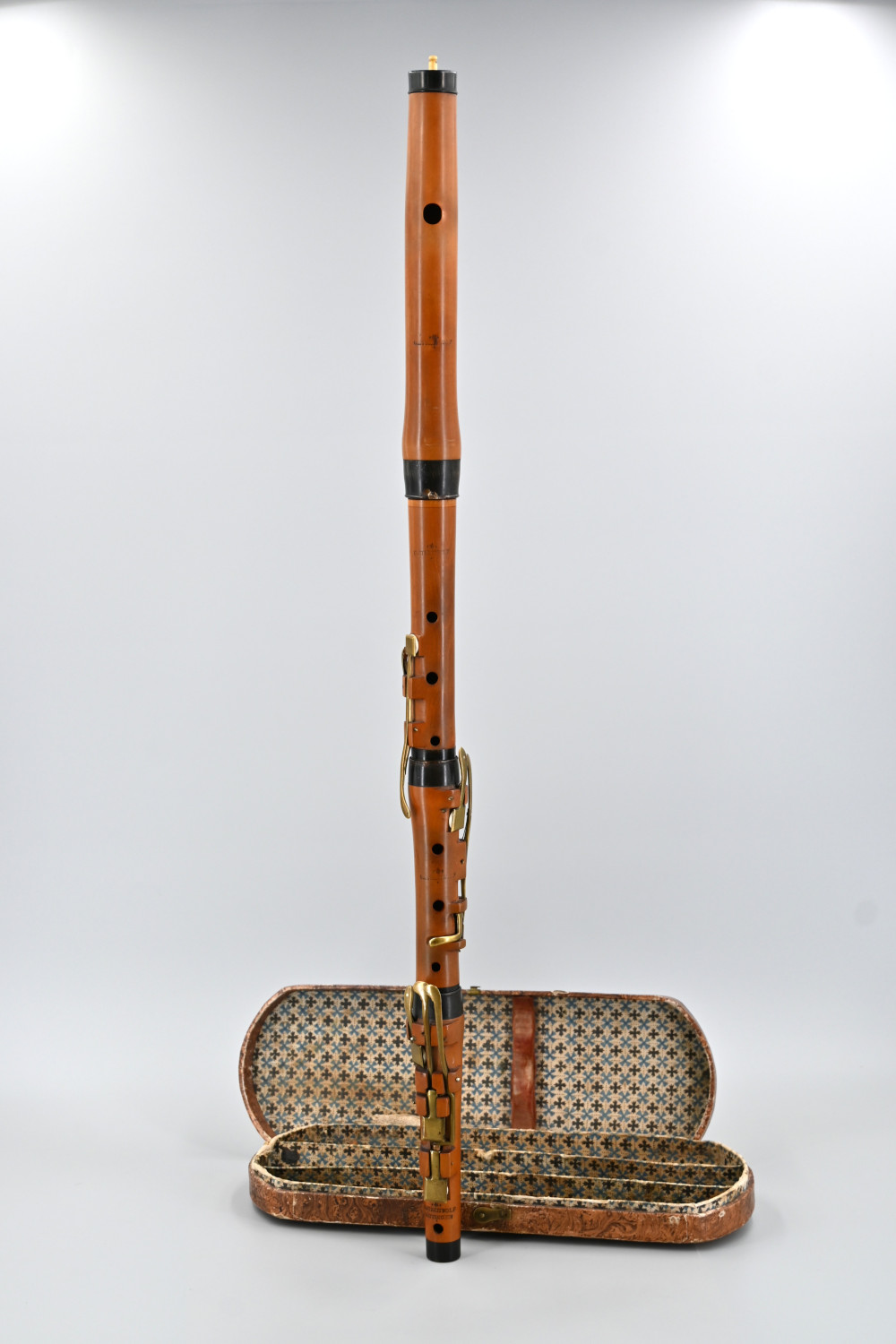
| Description | Four-part Early Romantic boxwood flute with seven keys by Gottlieb STREITWOLF |
| Materials | Boxwood, brass |
| Dimensions | Total length 684 mm Sounding length 599 mm Weight 400 g Weight with case 619 g |
| Condition | Working condition |
| Accessories | Original carton case |
| Special features | Tenon tuning slides |
| Price (€) | €2,200.00 |
| Ref | 1305 |
- Description
- Enquiry
Description
Early Romantic boxwood flute – STREITWOLF, Gottlieb
This early Romantic flute was made by the meister woodwind instrument maker, teacher, composer and inventor Johann Heinrich Gottlieb STREITWOLF (1779-1837).
He was admired by many… including Johann August Günther HEINROTH (1780–1846), music director in Göttingen who wrote an article about him which was published in the Allgemeine musikalische Zeitung on 11 October, 1820. The article included his praise:
Da Hr. Streitwolf ein guter Musikus ist, der auf den meisten jetzt gebräuchlichen Instrumenten gehörig Bescheid weiss, da er nicht bloss vorliegende Modelle blind nachahmt, sondern selbst denkt, Versuche macht, auf Neues und Besseres sinnt und seine Kunst weiter zu bringen strebt, so hege ich auch die Hoffnung, dass er manchen Mängeln abhelfen wird, welche verschiedene Bläse-Instrumente immer noch an sich tragen.
Given that Mr Streitwolf is a skilled musician who is very knowledgeable about most of the instruments in common use today, and since he does not merely blindly imitate existing models but thinks for himself, experiments, devises new and improved ideas, and strives to advance his art, I also harbour the hope that he will remedy many of the shortcomings that various wind instruments still possess.
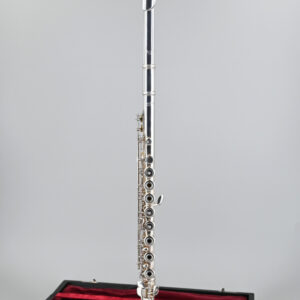
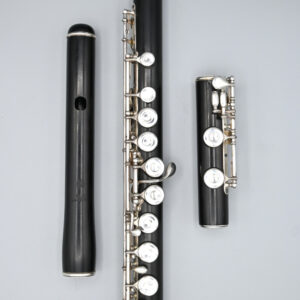
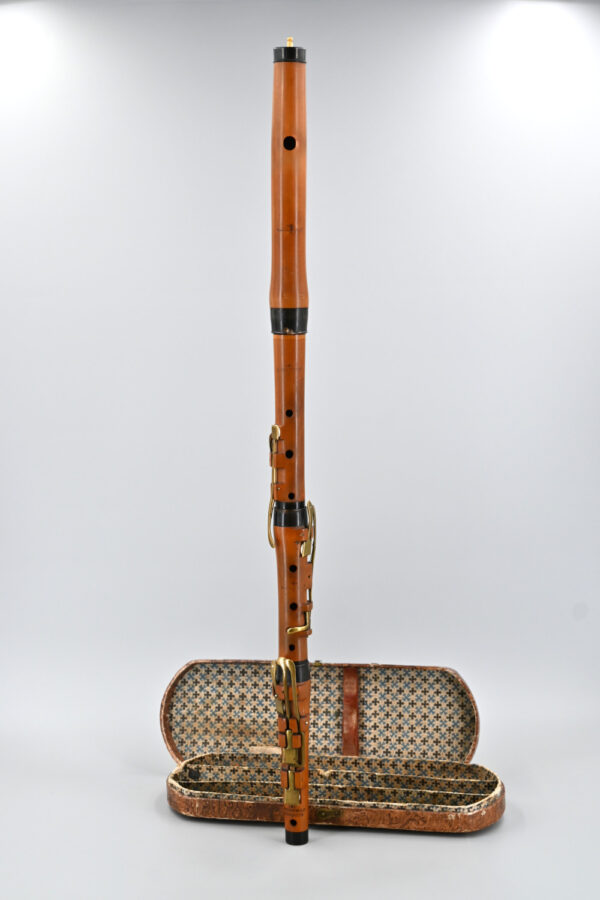
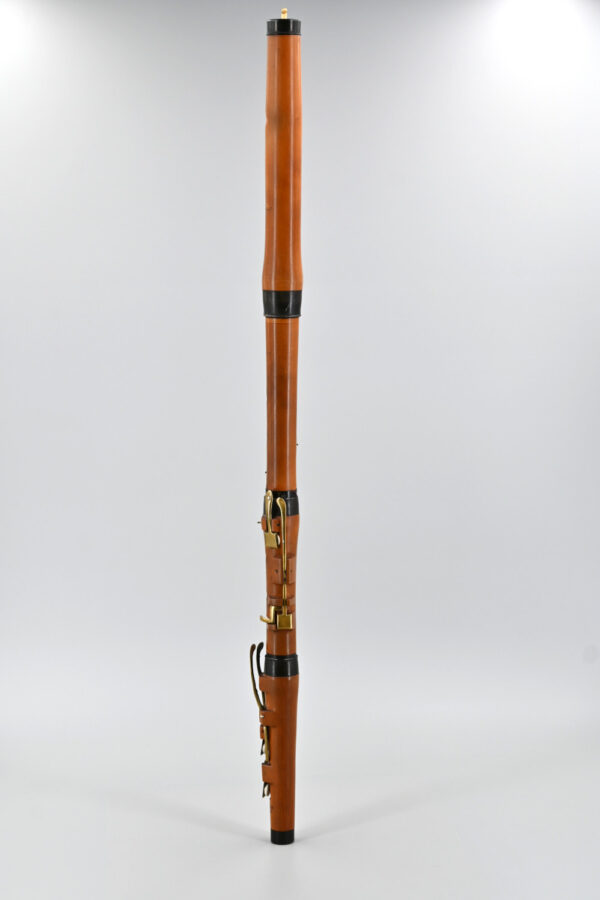
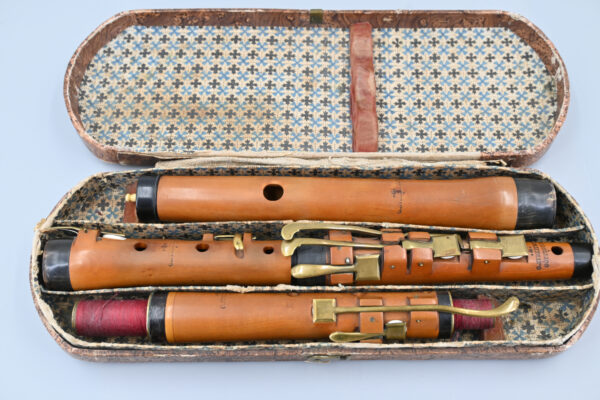
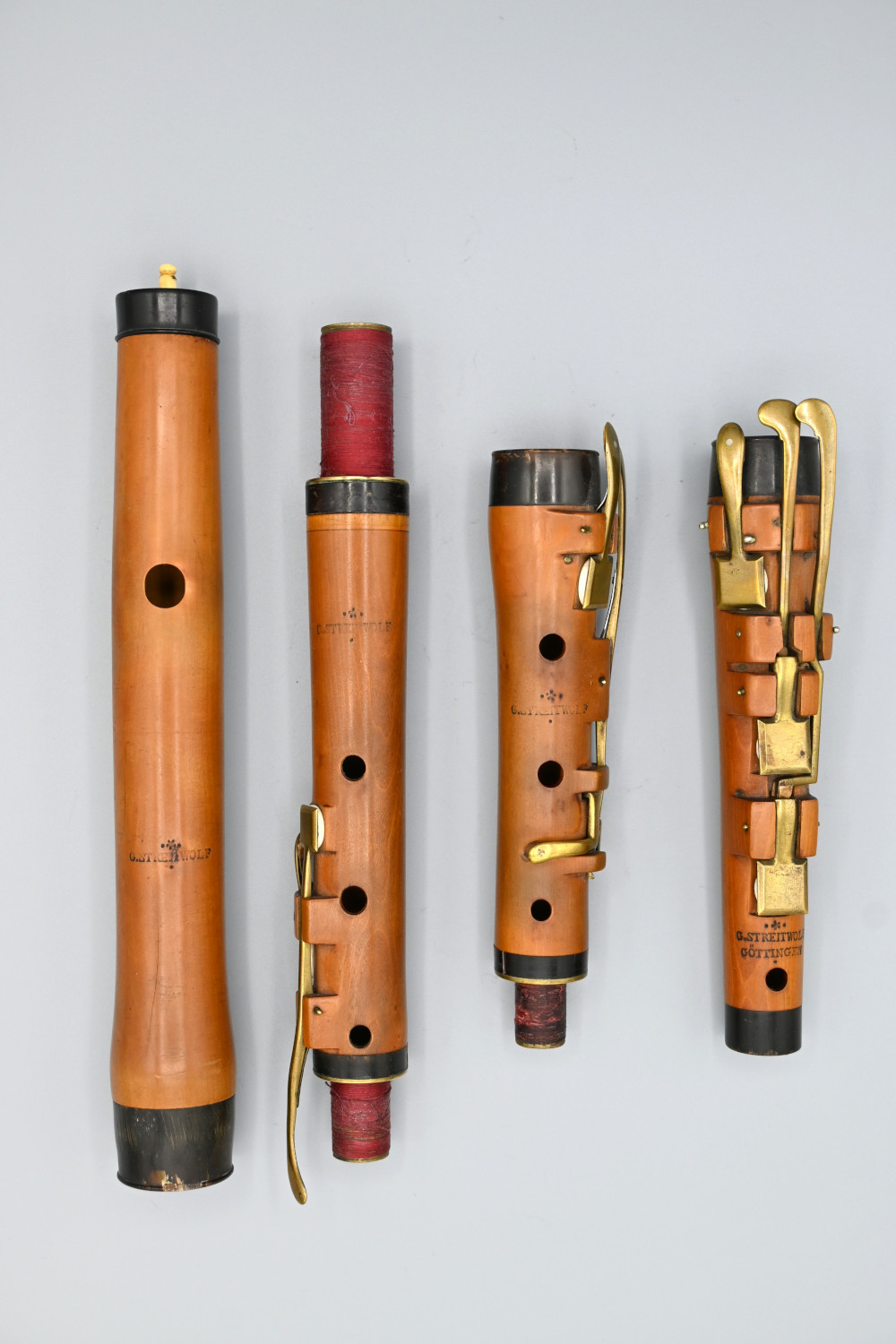
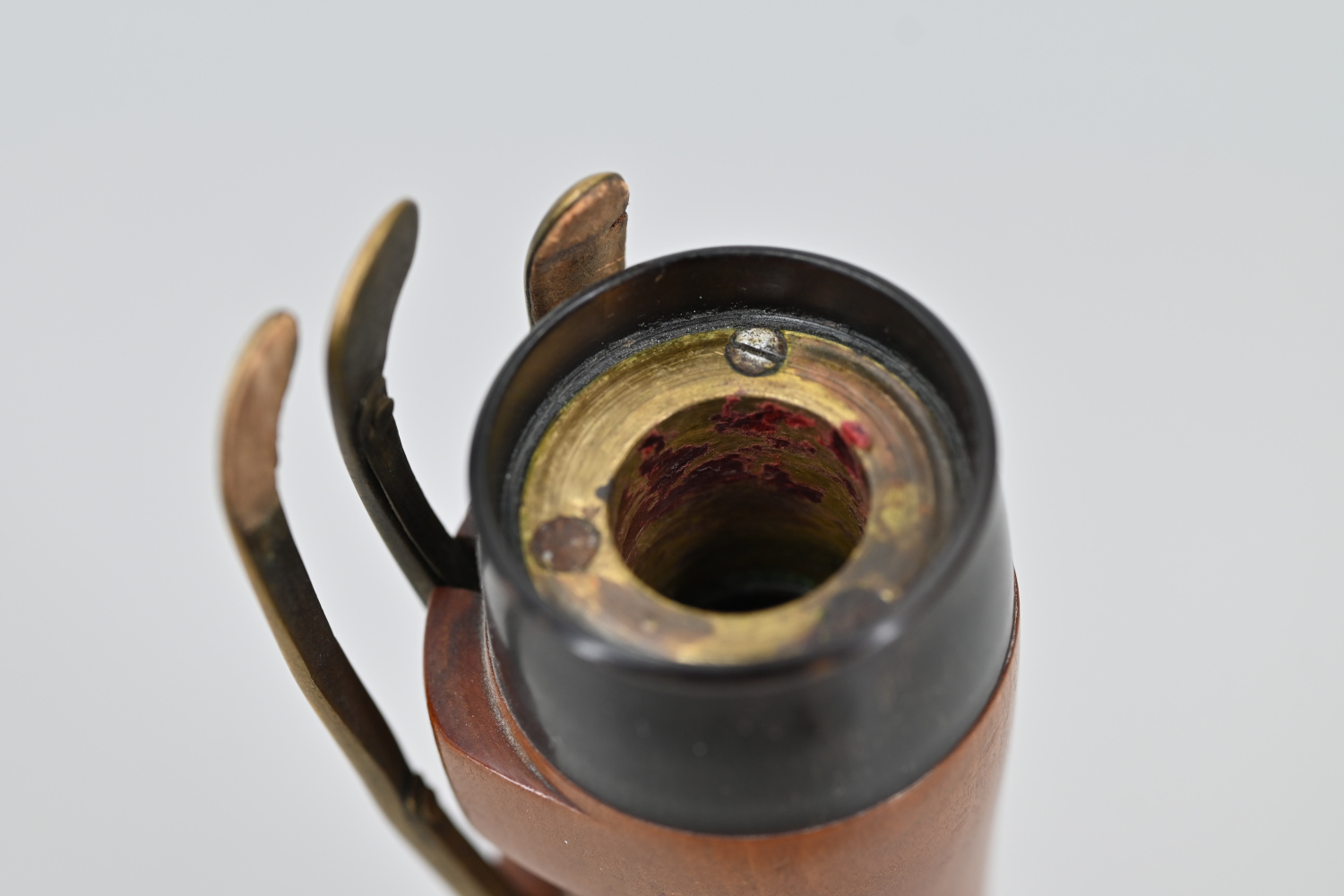
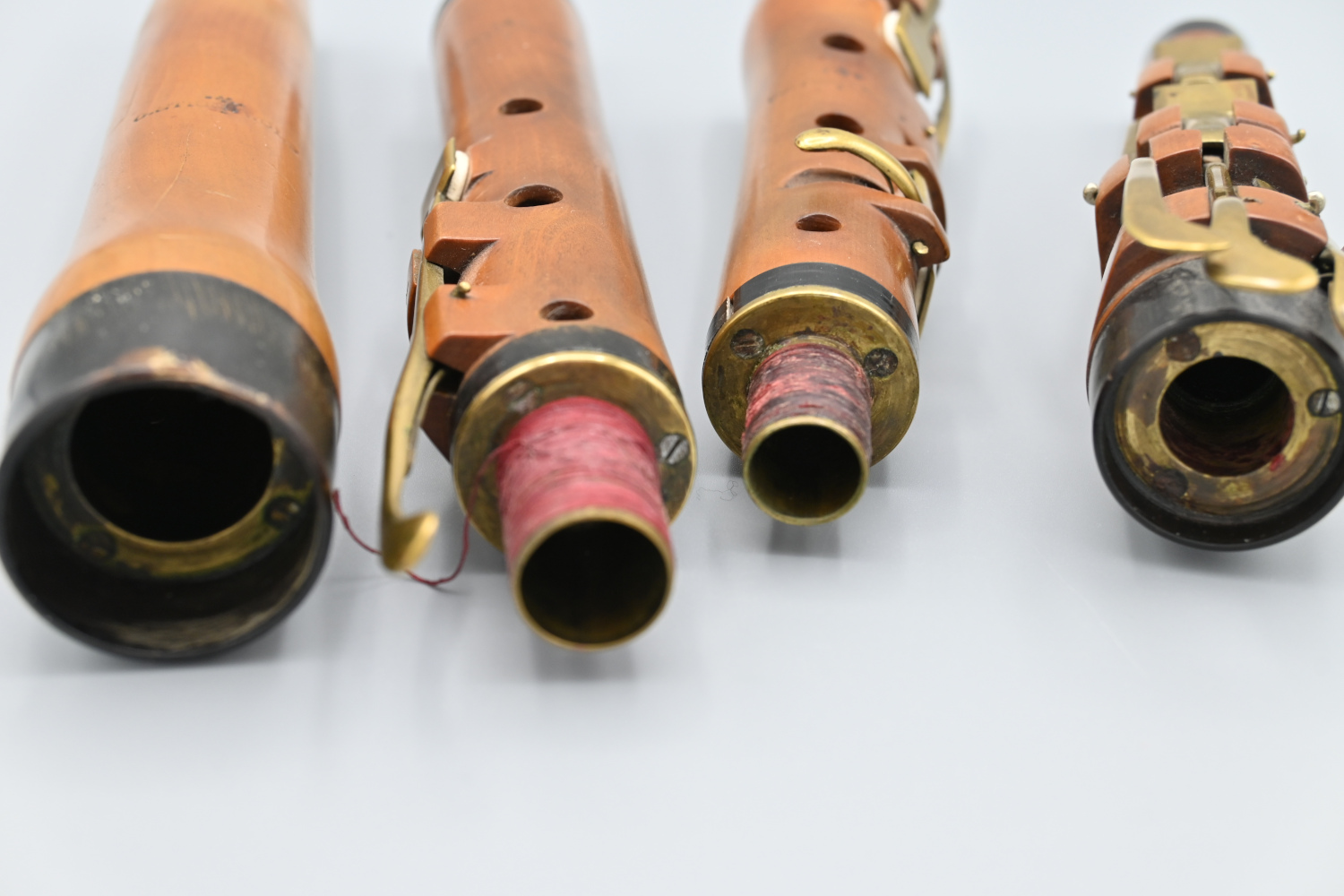
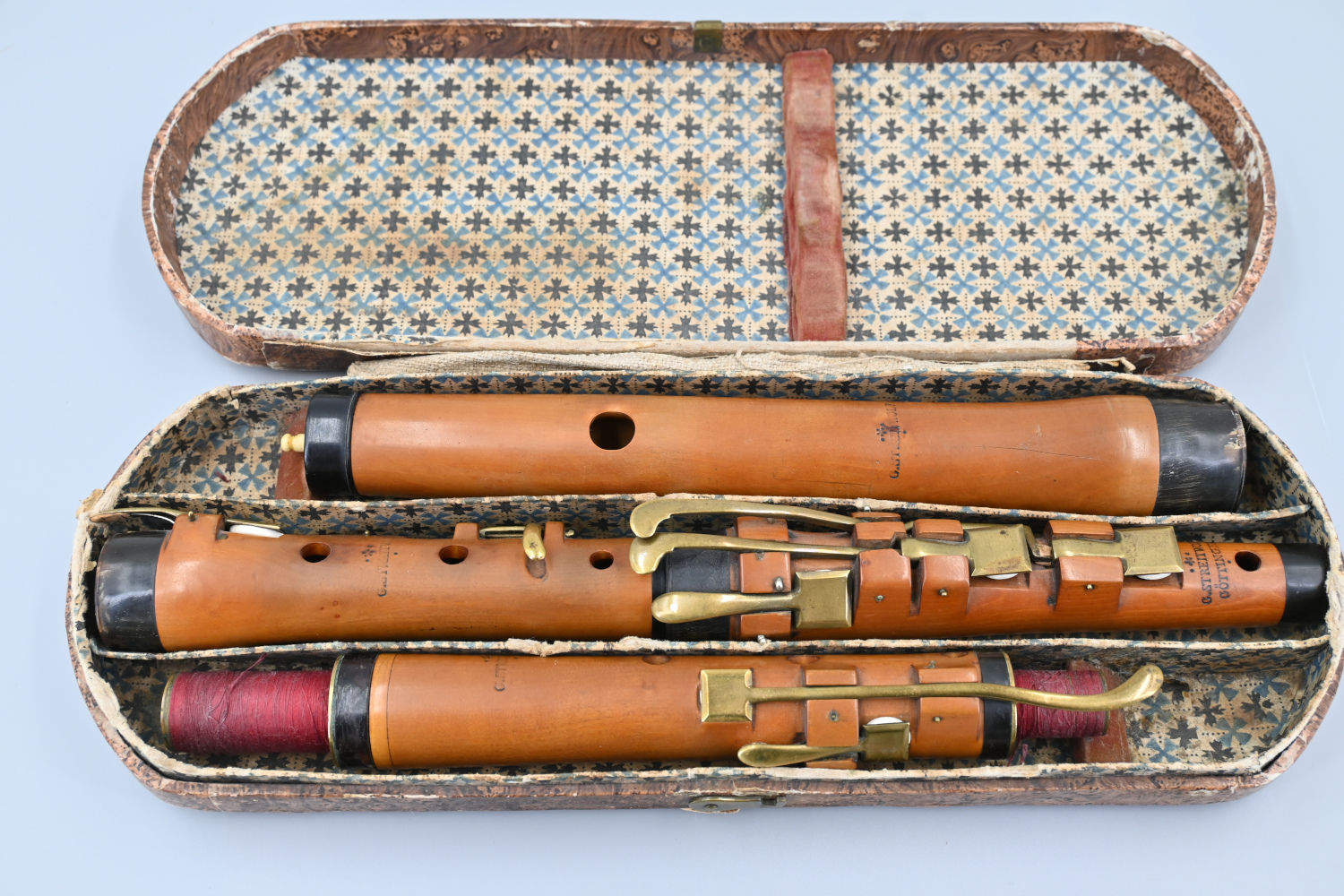
The flute is made of boxwood with seven brass keys and horn rings. The keys are very traditionally designed in a rectangular shape – typically German and sort of “Grenserish”. The foot joint is very conical and has a typical Streitwolf hole at the end to tune the low C. Additionally, a common feature of his instruments visible here is that the third and sixth fingerholes are drilled at a slight angle rather than straight. Moreover, the fingerholes for both the right and left hands are drilled in an ergonomic offset style, making reach so much easier. The keys are held in wooden blocks with brass pins. These wooden blocks are further supported by brass pins/nails which are fixed into the wood. This was typical of clarinet and other woodwind makers of the time. The flute has a screwcork.
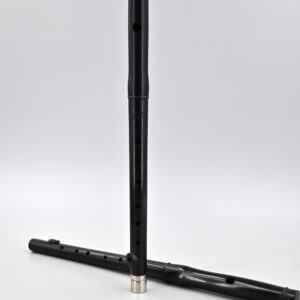
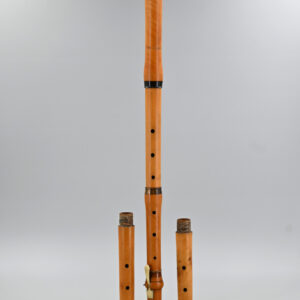
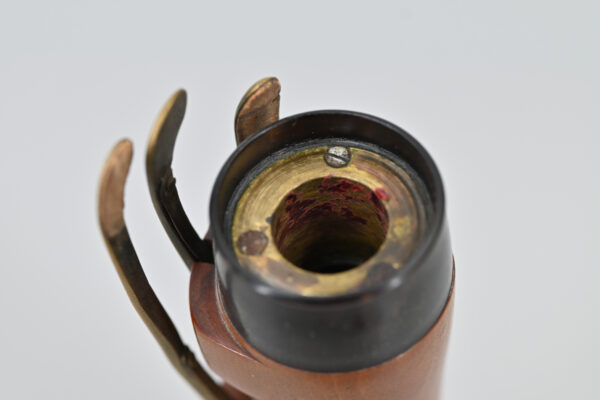
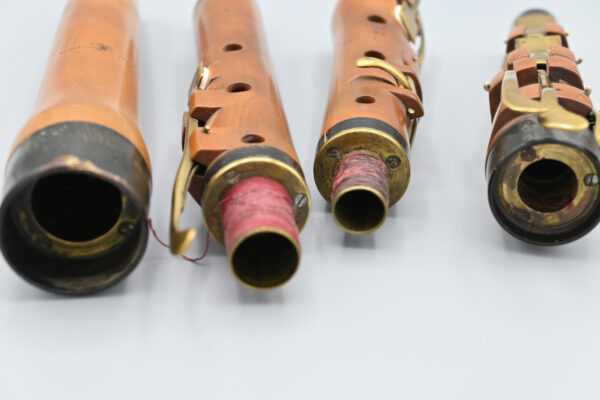
This instrument features ones of Streitwolf’s innovations – tuning-slide tenons. They made it possible to extend all three parts of the flute using brass extension pieces. We can see that these brass tuning slides are fixed with screws to the wood. The ends of the middle joint also have horn rings which, like magic, hide the extensions. The end ring of the head joint, right-hand joint and foot joint are very thinly turned so that the extension is also invisible.
Music director Dr. Heinroth was very impressed with this invention as he wrote in the same article:
So verdienen schon seine Flöten empfohlen zu werden, welche, ohne dass es äußerlich sichtbar ist, in allen drey Theilen ausgezogen und bis zu einem halben Tone, auch wohl noch mehr, tiefer gestimmt werden können, da durch aber keinesweges an Reinheit und leichtem Ansprechen verlieren.
His flutes, for instance, are certainly worthy of recommendation; they can be lengthened in all three sections (though this is not visible from the outside) and tuned down by as much as a semitone, or perhaps even more, without in any way losing their purity of tone or responsiveness.
With the tuning slides fully inserted, the flute plays at slightly over a=440 Hz, so you can play of course lower than that. You can adjust the sounding length not just at the head joint but also at the other two tenons using the brass tuning-slide tenons. This means that you can extend the instrument more evenly, avoiding intonation problems.
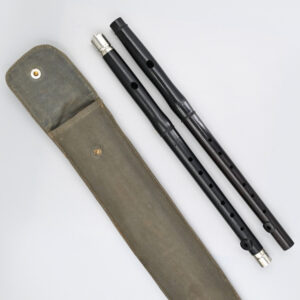
The flute is supplied in its original carton case, which needs repair. In terms of condition, this Streitwolf flute is playable but needs restoration to be played professionally again. The tip of the screwcap was replaced with imitation ivory. There is a crack in the head joint, caused by the brass inlay and there is some damage to the horn. But in general, the flute is in very good condition and is very rare indeed.
Our opinion
Gottlieb Streitwolf was a remarkable instrument maker. This flute showcases his innovative tuning slide tenons. We have yet to see another flute equipped with these particular tenons. This instrument would make a valuable contribution to a museum or collection, highlighting the advancement of the flute in the early nineteenth century.