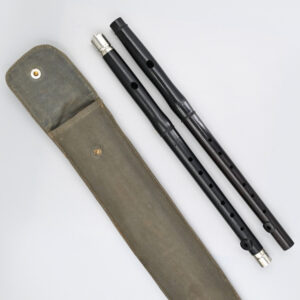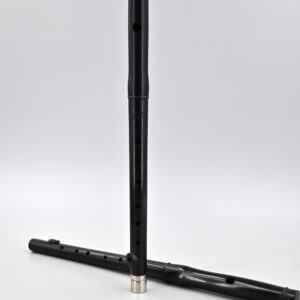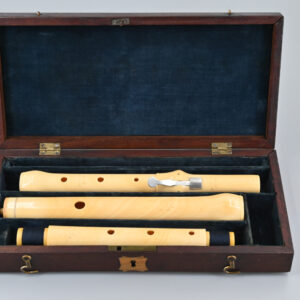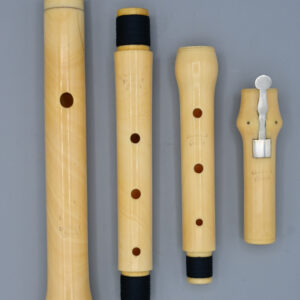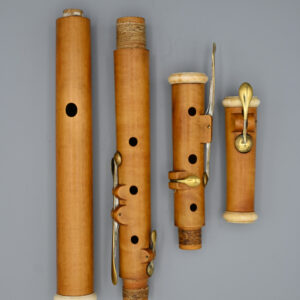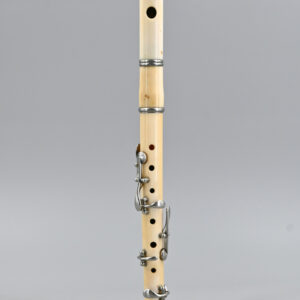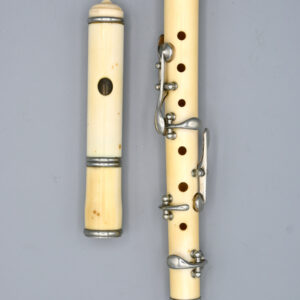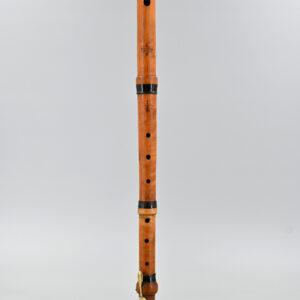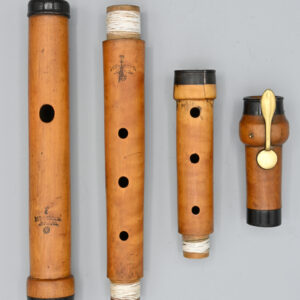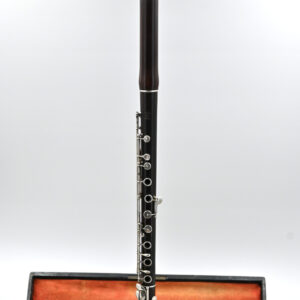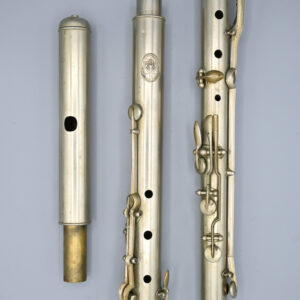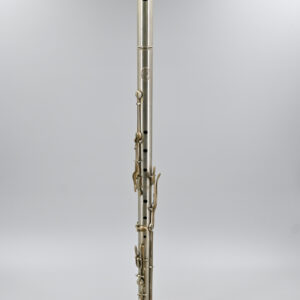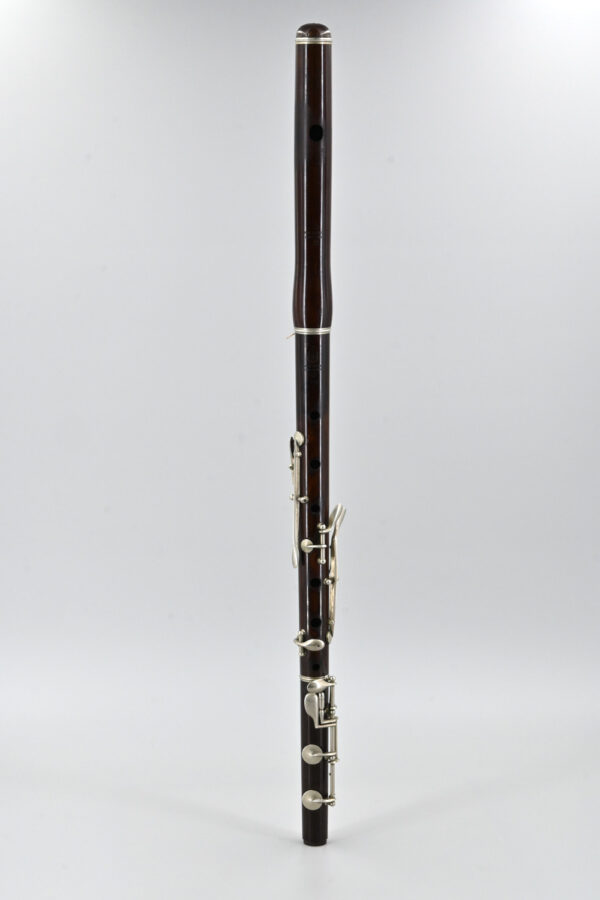
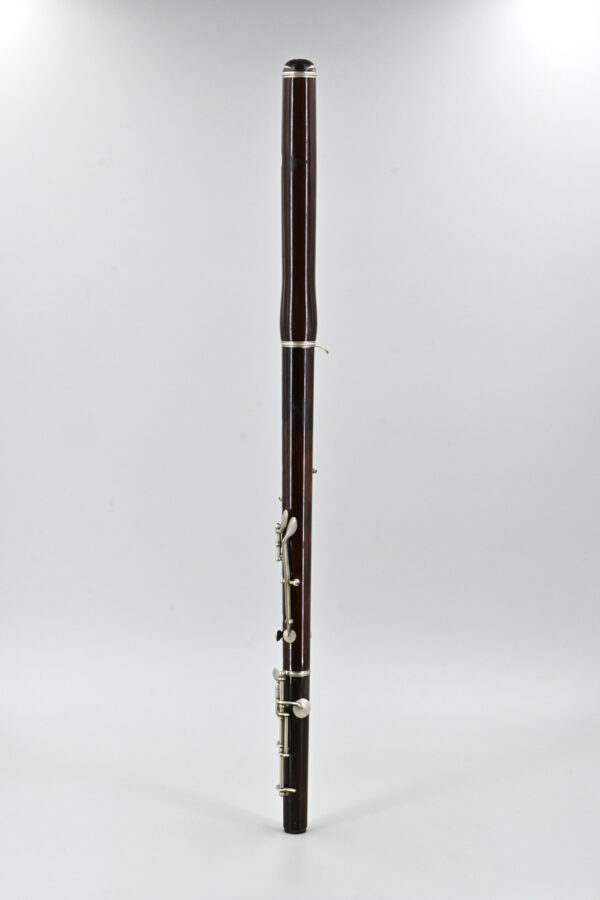
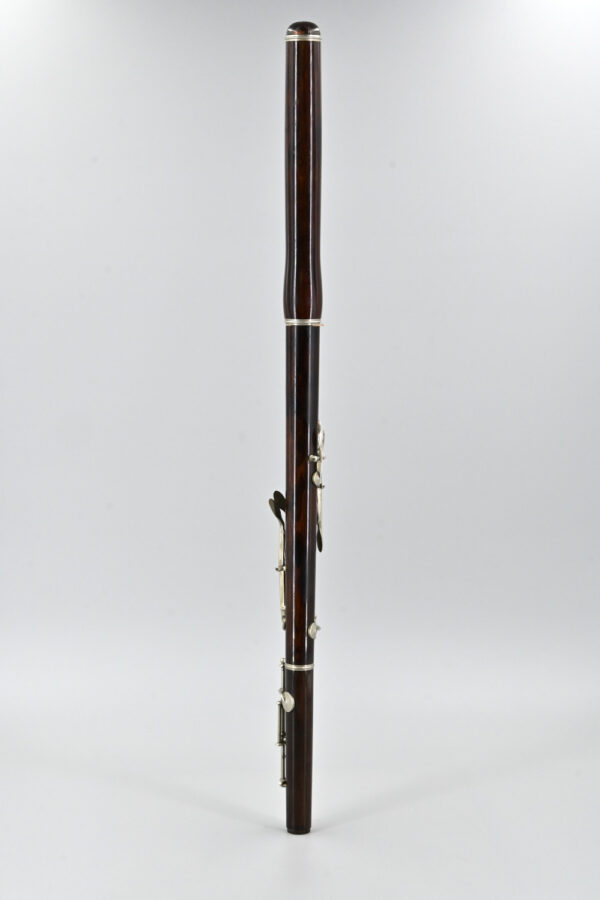
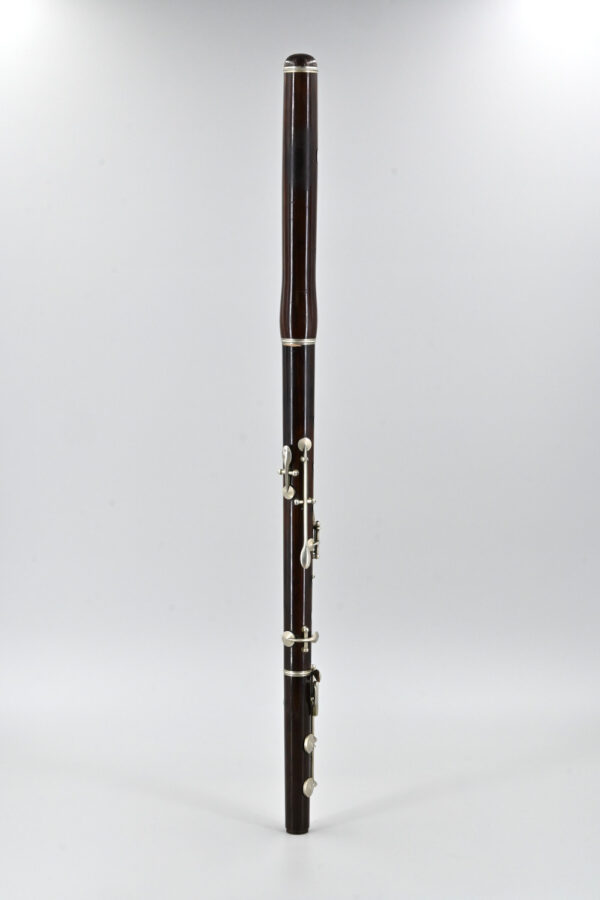
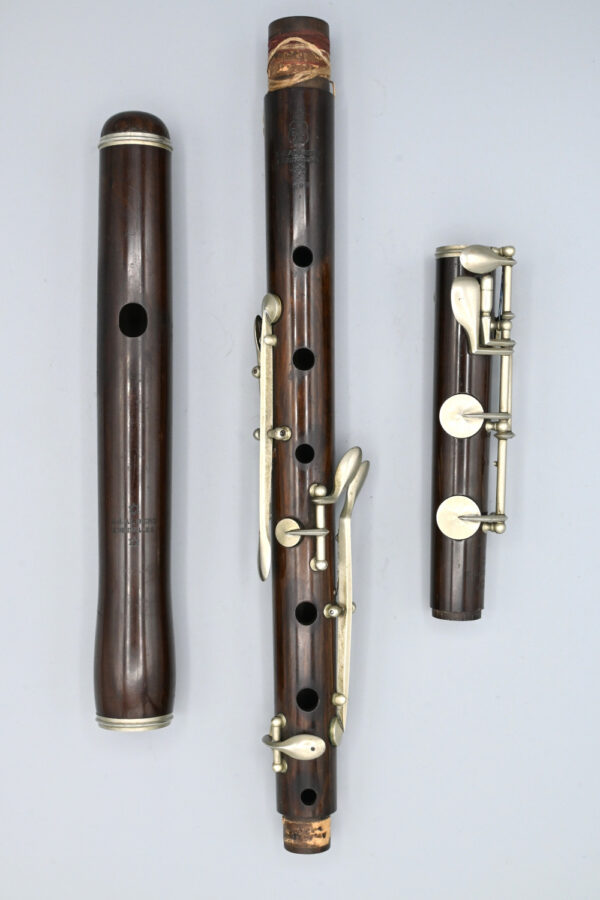
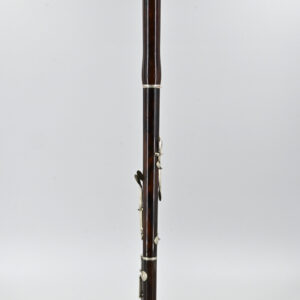
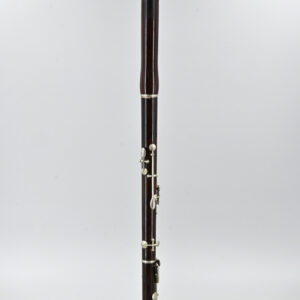
Eight-keyed cocuswood flute – ALBERT, E.J.
450,00 €
| Category | Flutes |
| Maker | ALBERT, E.J. |
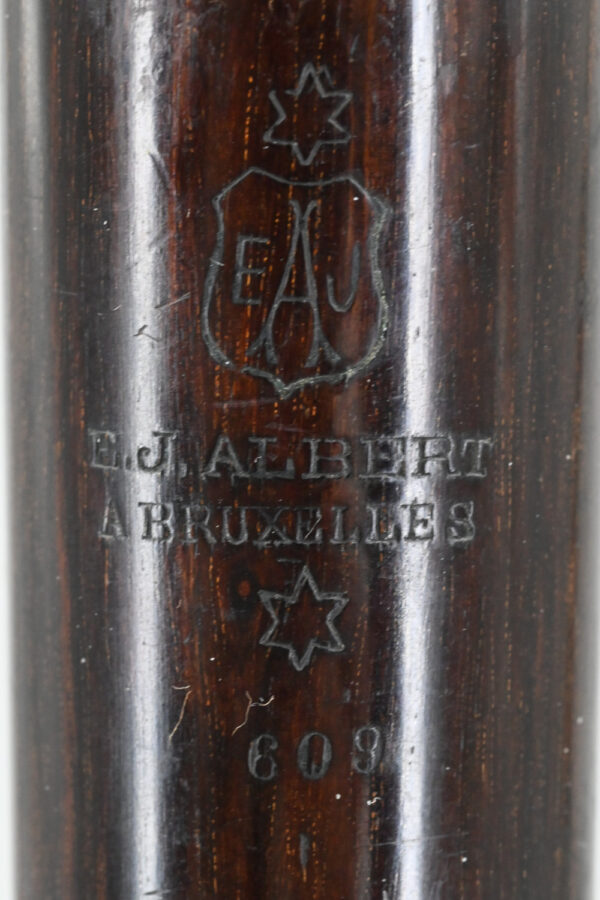
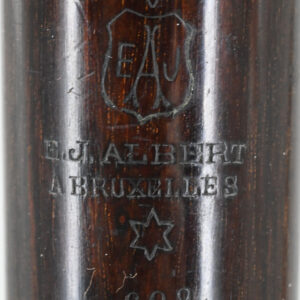
| Marks and inscriptions | [six-point star] / E.J. ALBERT / A BRUXELLES / [six-point star] COAT OF ARMS WITH INITIAL EAJ Serial number 609 |
| Period | 1900-present |
| Place of origin | Brussels, Belgium |
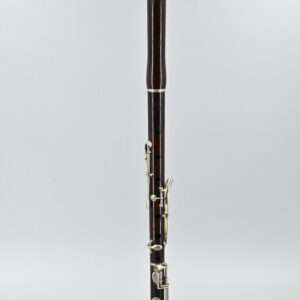
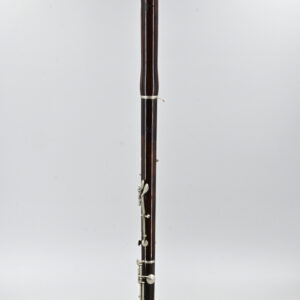
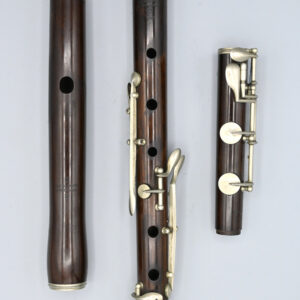
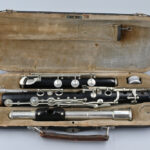
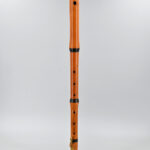
| Description | Eight-keyed cocuswood flute by E.J. Albert |
| Materials | Cocuswood, nickel silver |
| Dimensions | Total length 641 mm Sounding length 560 mm Weight 349 g Weight with case 724 g |
| Condition | Sold as is, for restoration |
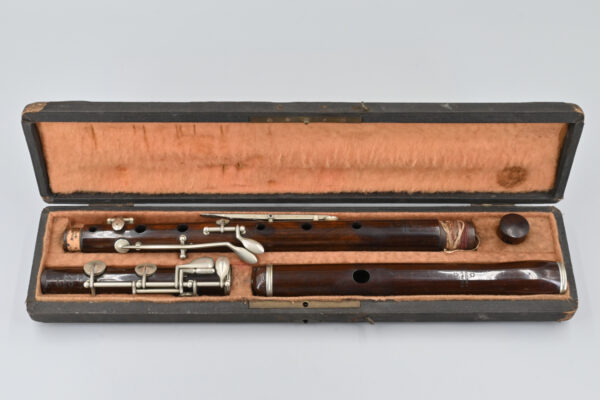
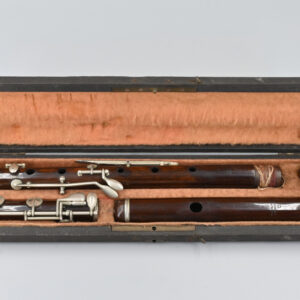
| Accessories | Original case and wooden grease pot |
| Price (€) | €450.00 |
| Ref | 1391 |
- Description
- Enquiry
Description
Eight-keyed cocuswood flute – ALBERT, E.J.
This eight-keyed cocuswood flute was made by one of the members of the renowned ALBERT family of woodwind instrument makers. Joseph Eugène ALBERT (1860-1931) was the son of Eugène ALBERT (1816–1890), who established the famous Brussels workshop and the famous Albert System clarinet. Joseph Eugène Albert and his two older brothers, Jean Baptiste Gustave ALBERT (1845-1899) and Jacques Émile ALBERT (1849-1918) worked together as ALBERT FRÉRES, when their father retired in 1887. But the relationship didn’t work out and so later in 1895, each brother decided to continue independently under his own name.
Why does the flute bear the name E.J. Albert? It turns out that Joseph Eugène Albert was somewhat of a rogue. According to the literature, he frequently swapped his first two names or dropped “Joseph” entirely. His brothers even secured a legal injunction to force him to sign as “Joseph E. Albert”, though he ignored the ruling after they passed away. Furthermore, he falsely claimed to have won a prestigious award at the 1910 Brussels exhibition and was accused of illicitly selling the “E. Albert” trademark to Jack HEYWORTH of Liverpool. Following his death, his second wife, Juliette Tyvoli, ran the business under the name “Albert (widow)” until 1950.
We think this flute was made around 1900. It is high pitched at a=450 Hz. The pitch of a=451 Hz was the official pitch of the Belgian army from 1879, but this didn’t last so long. So we think that it could be that this instrument was exported to Britain and the pitch there around 1900 was a=452 Hz.
The instrument is in fair shape with a minor hairline crack in the head joint. To restore it to optimal playing condition, it will require new pads and some TLC. It comes complete with its original hard case. Inside, together with the flute, is the wonderfully turned wooden grease pot!