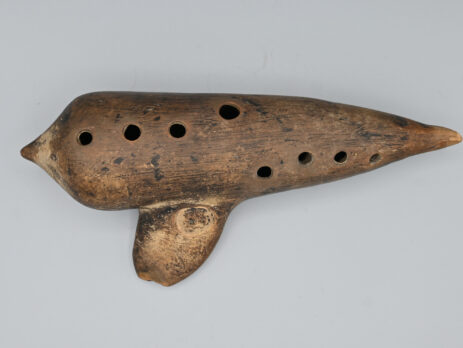
Ocarina – DONATI, Giuseppe

This ocarina was made by the great master and inventor of the ocarina himself Giuseppe DONATI (1836-1925). Donati lived and worked in his hometown of Budrio at the outset of his career as an ocarina maker. He moved to Bologna in 1878 where he lived and worked. In 1904 he...
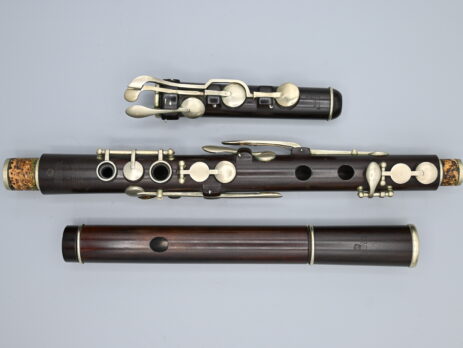
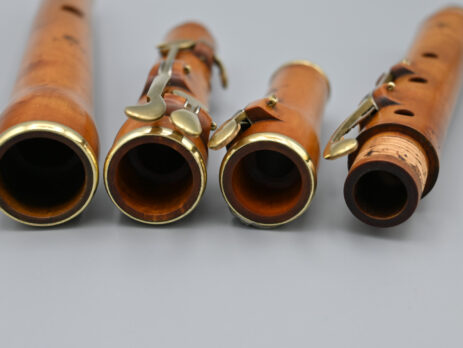
SICCAMA Flute – CHAPPELL, Samuel Arthur

This flute really needs no introduction to many flutists – the famous ‘Siccama’ flute. The Siccama flute was invented by Abel SICCAMA (c. 1810–65). He was a Dutch professor of languages and amateur flutist who had settled in London. It seems that Siccama created several flute designs. But his ‘Diatonic’...

Flute – LOT, Louis

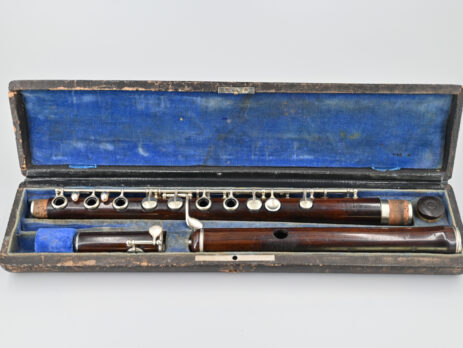
This cocuswood flute was made by the master himself – Louis LOT (1807-96). By checking the serial number 1889, we can date this flute to 1874. All three sections of the instrument are stamped with the Louis Lot stamp, plus the serial number. This proves that the parts of the instrument all...

Luigi Vanotti – made in Milan

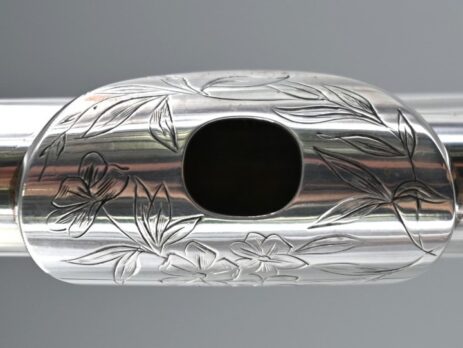
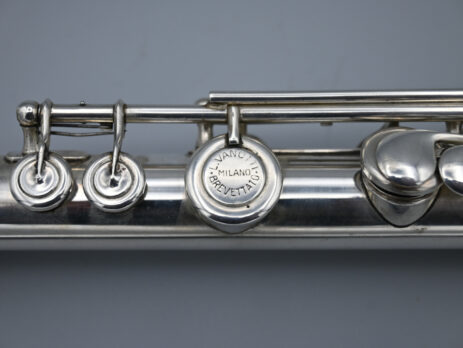
Luigi VANOTTI worked for the company Rampone & Cazzani before setting up his own business in 1909 in Milan, at Via Solferino 46. He specialised in making Boehm flutes, but also constructed several non-standard experimental models. He was clearly an innovator. One innovation was the Albisiphon, which he built and...

Conical ring-key flute – Louis LOT (Villette)

This beautiful Louis LOT cocuswood, conical ring-key flute is in playing condition. It was made shortly after Louis Lot had retired and the company was under the ownership of Honoré Désiré VILLETTE – Lot’s first successor. Villette was born on 20.04.1827 in Sorel Moussel – a small village about 10 kilometres...

PINFOLD’S metronome

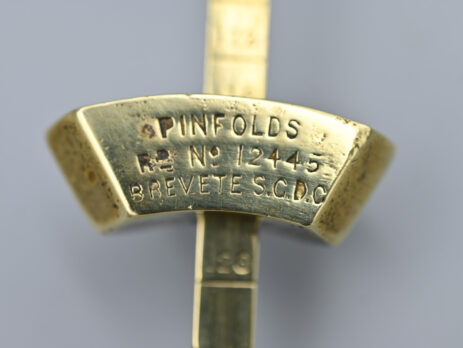
This crazy-looking yet elegant metronome was invented and patented by Arthur Gough PINFOLD (1864-1940). Arthur was one of four children, born in Stony Stratford, Buckinghamshire, England. His father was a watchmaker, jeweller and musician and his children would follow on in his footsteps. At some point, the family relocated to...

Anonymity – What’s in a name?

We often come across musical instruments with no stamp and no indication as to where they were made or their makers. They remain forever unsigned, unstamped and anonymous. These instruments are often brushed aside and rejected as worthless or inferior. But are they? Why did instrument makers choose anonymity and...

The Heideggers of Passau

The surname HEIDEGGER is synonymous with instrument making in Passau and Linz. The family’s instrument-making history begins in the 1840s and ceases over 130 years later in 1973. Their story is not unlike other instrument makers of those days…difficult, complicated but for many, very interesting, especially since in this case,...