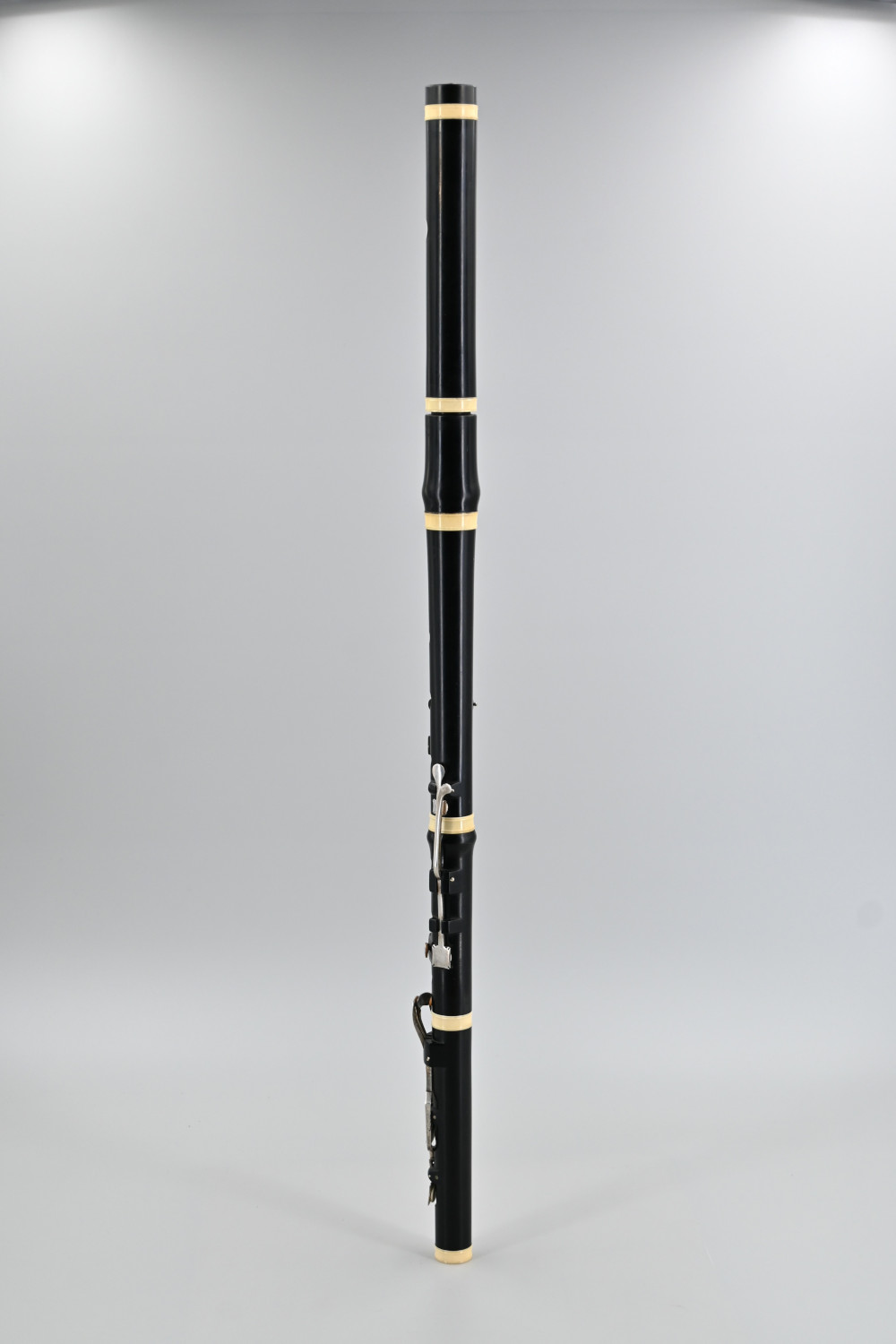
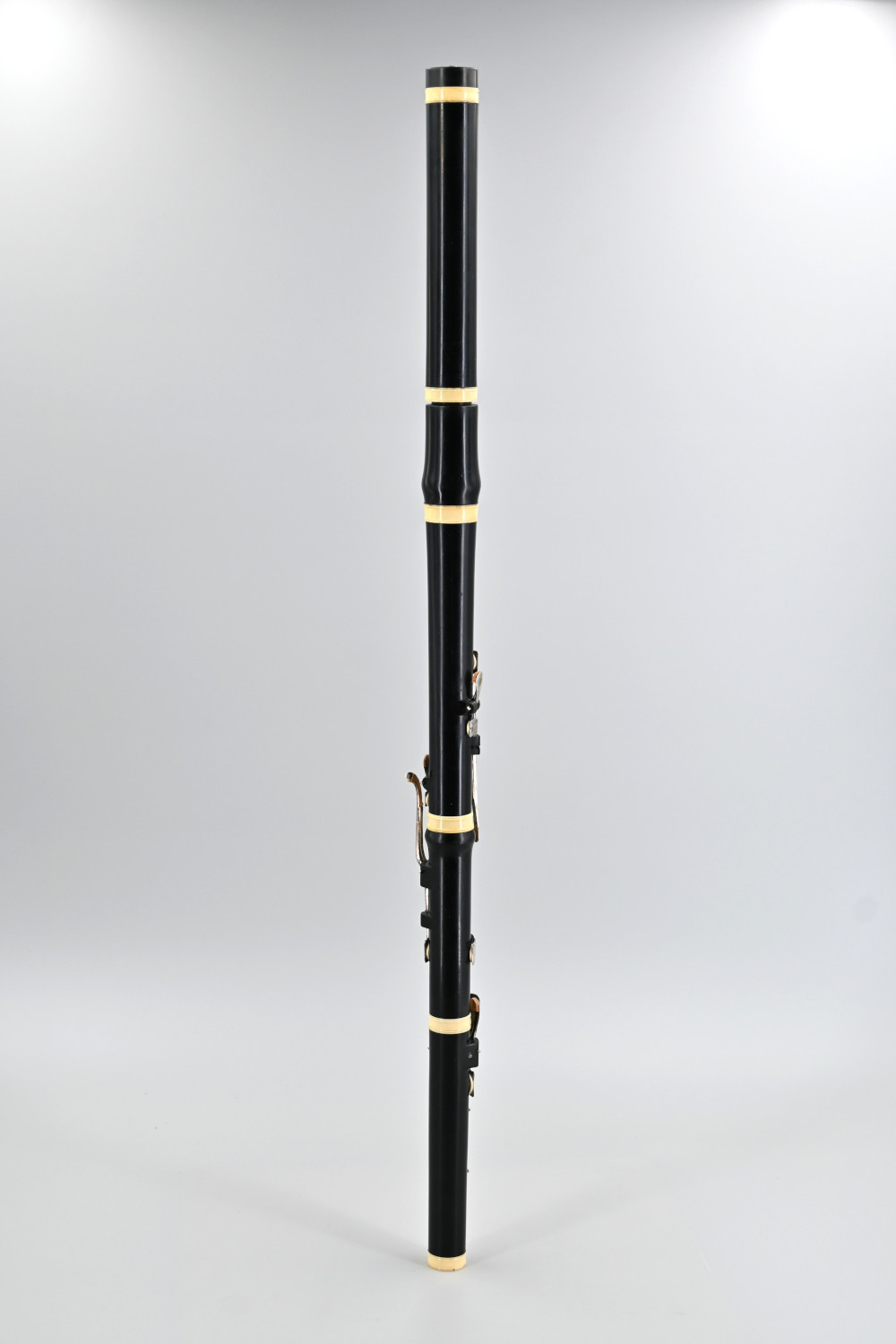
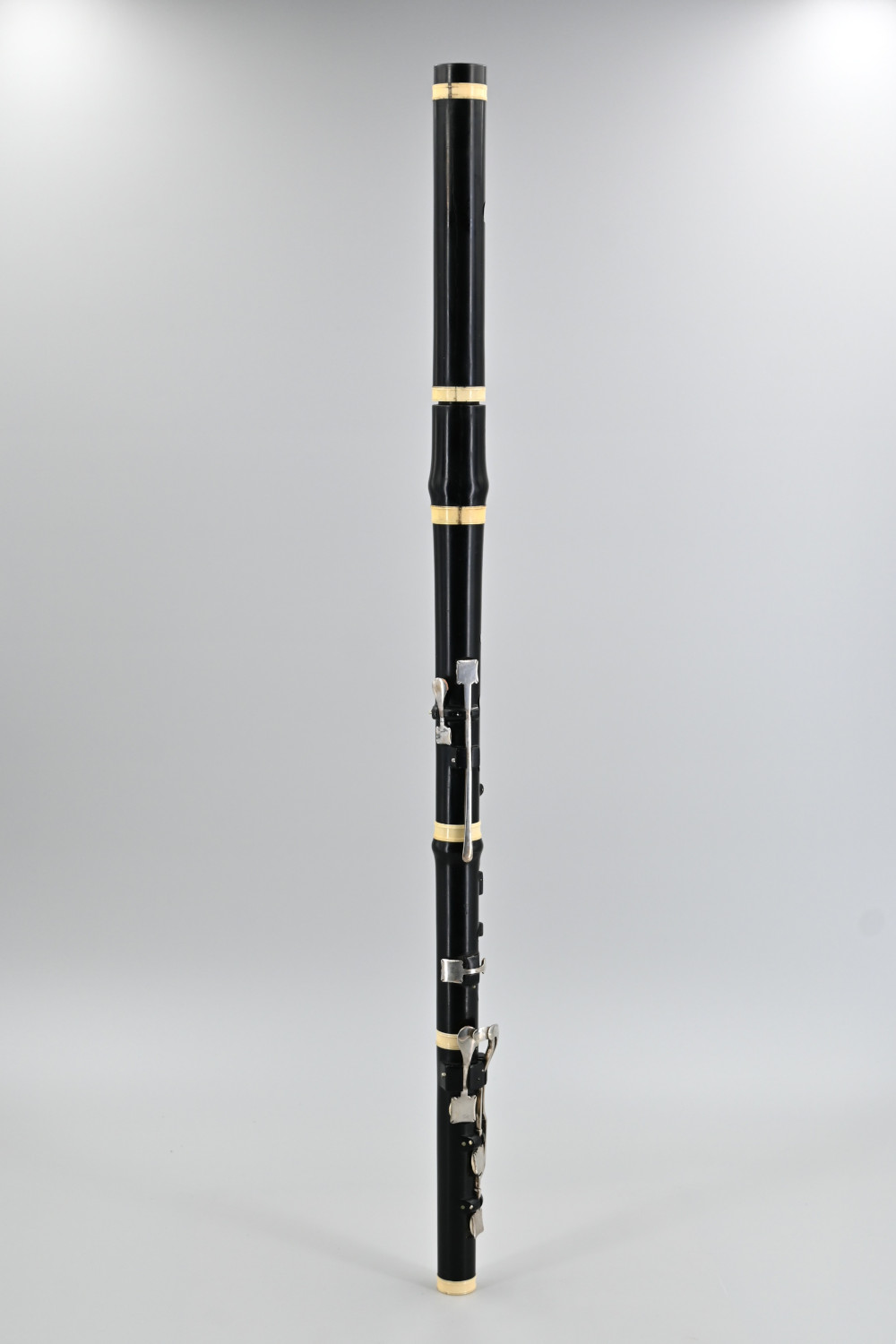

Ebony flute – BARFOOT, C.S.
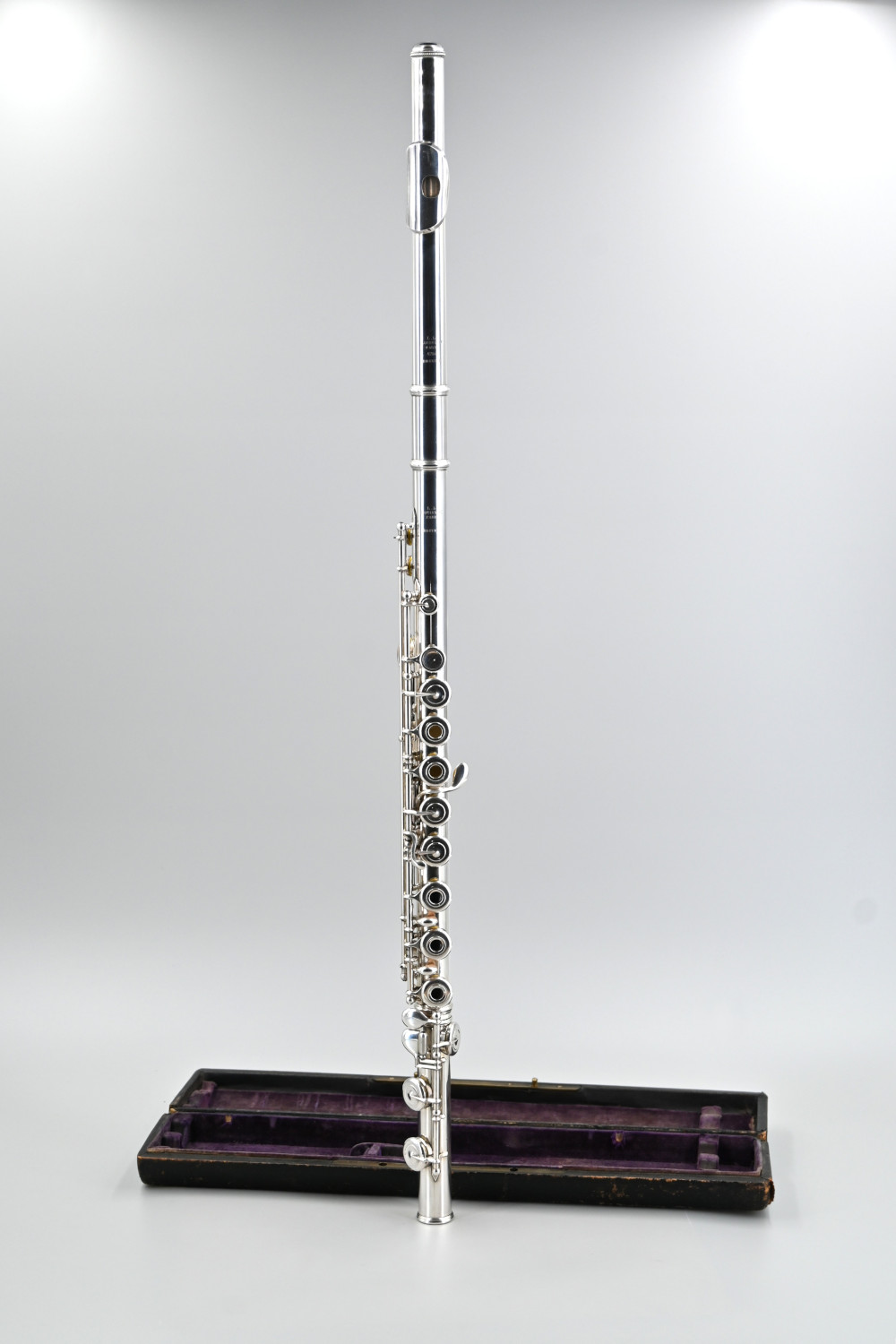
990,00 €
| Category | Flutes |
| Maker | C.S. BARFOOT |
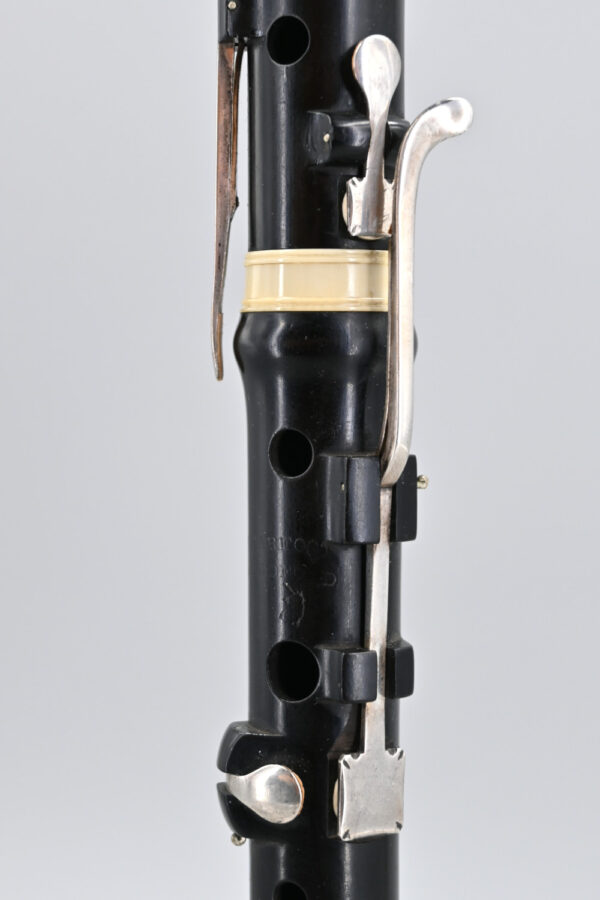
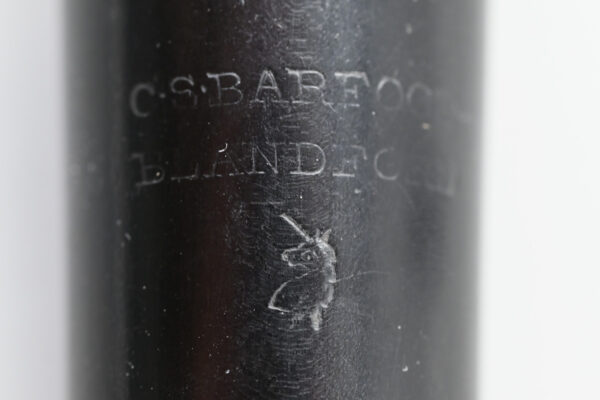
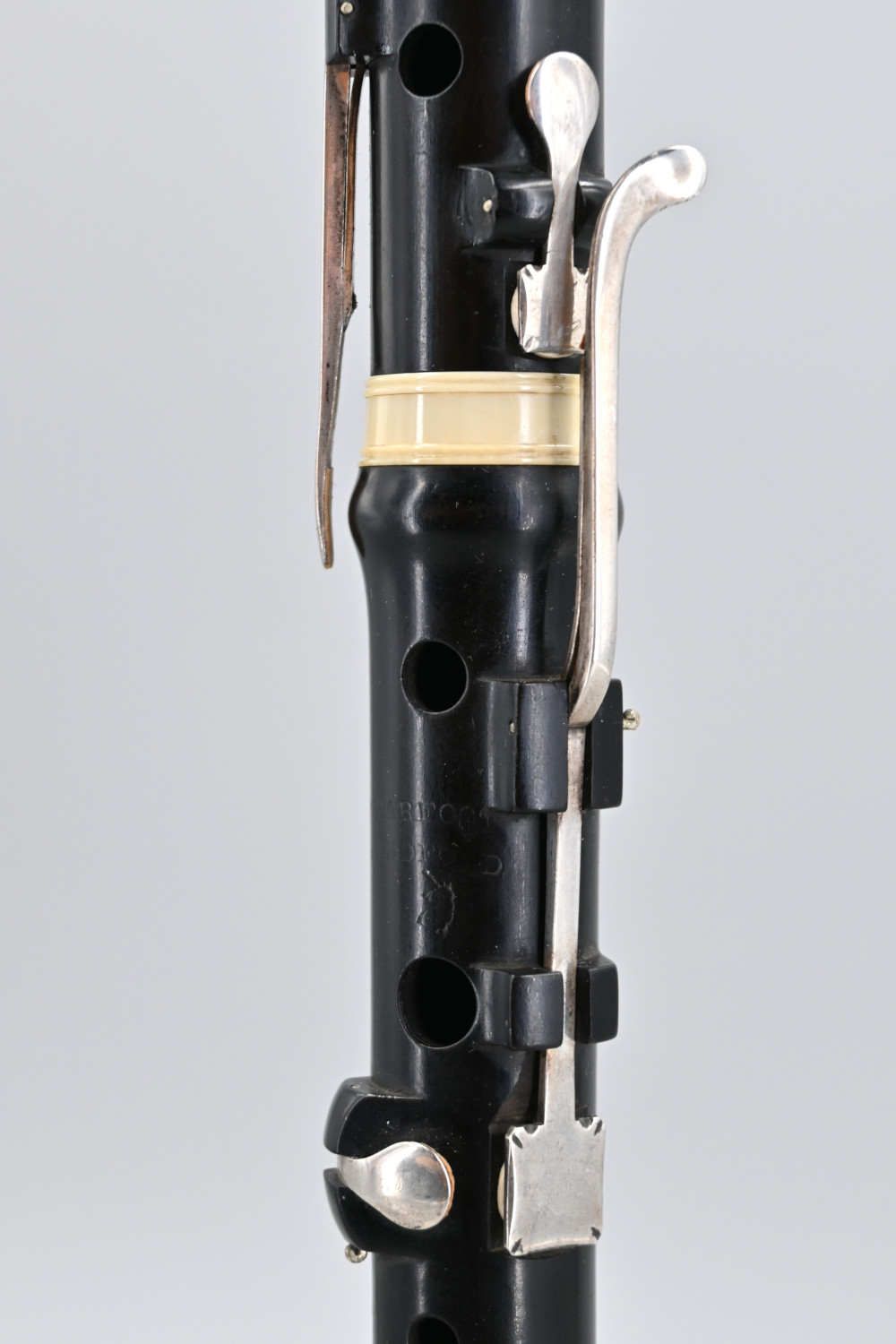
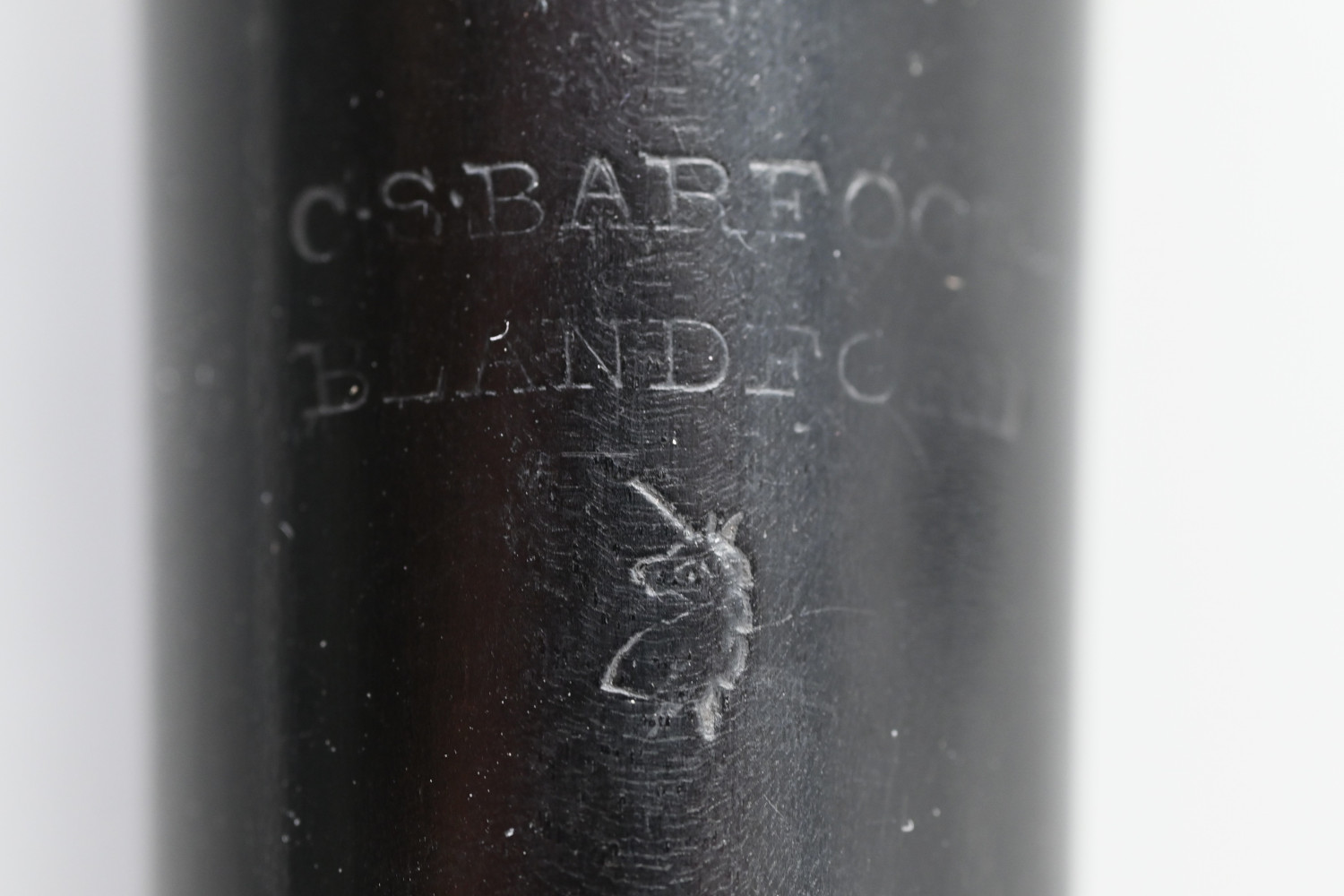
| Marks and inscriptions | Barrel: C.S. BARFOOT / BLANDFORD/ [unicorn] / WARRANTED Left-hand, right-hand and foot joints: C.S. BARFOOT / BLANDFORD / [unicorn] |
| Period | 1750-1830 |
| Place of origin | England |
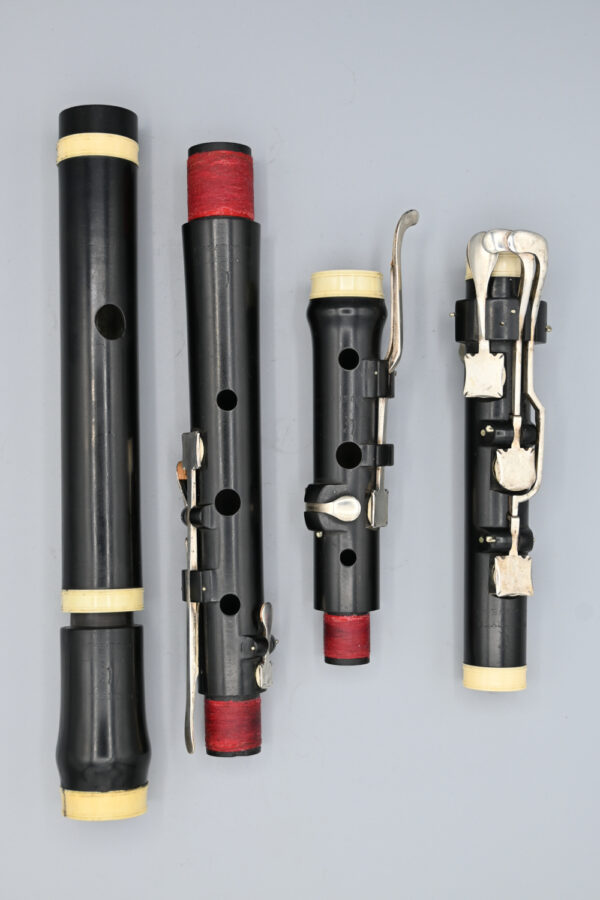
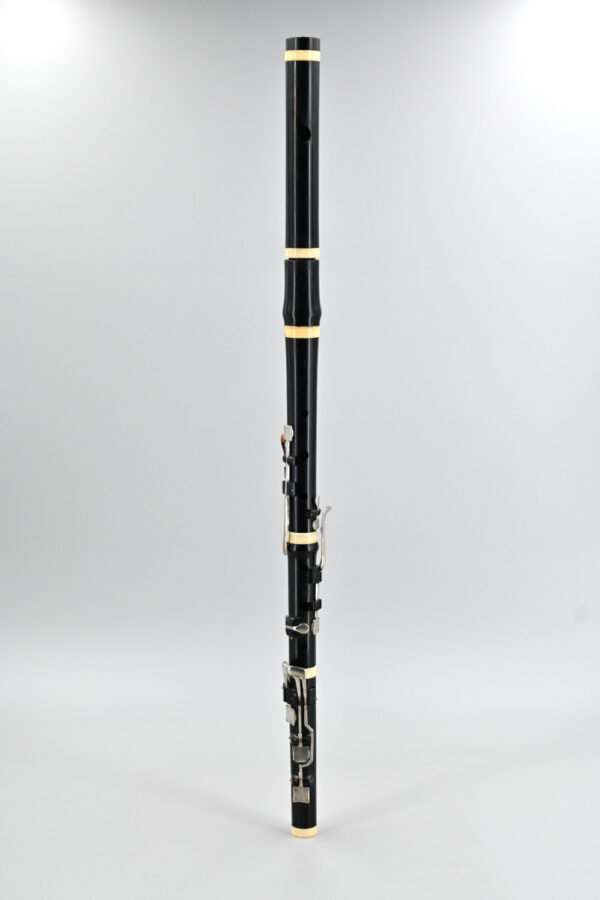
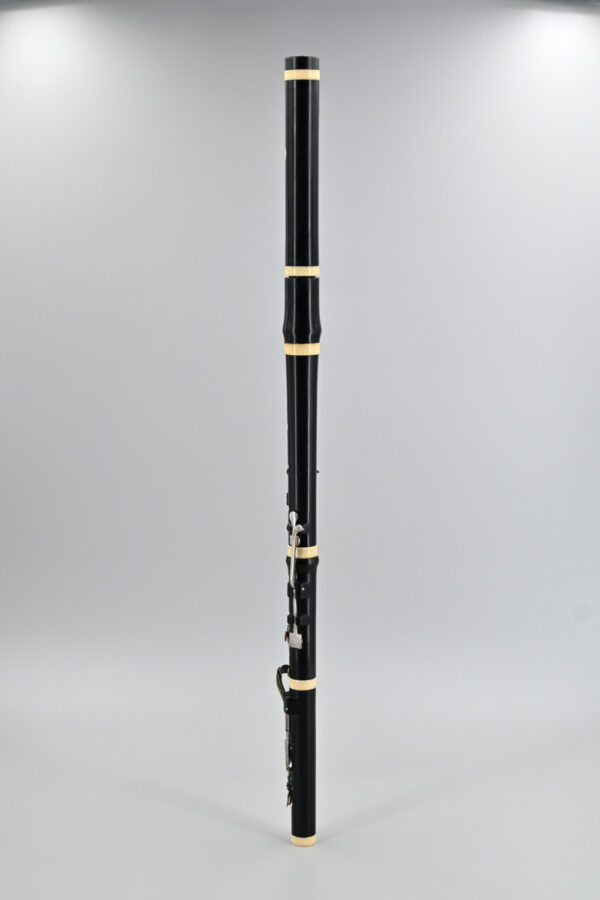
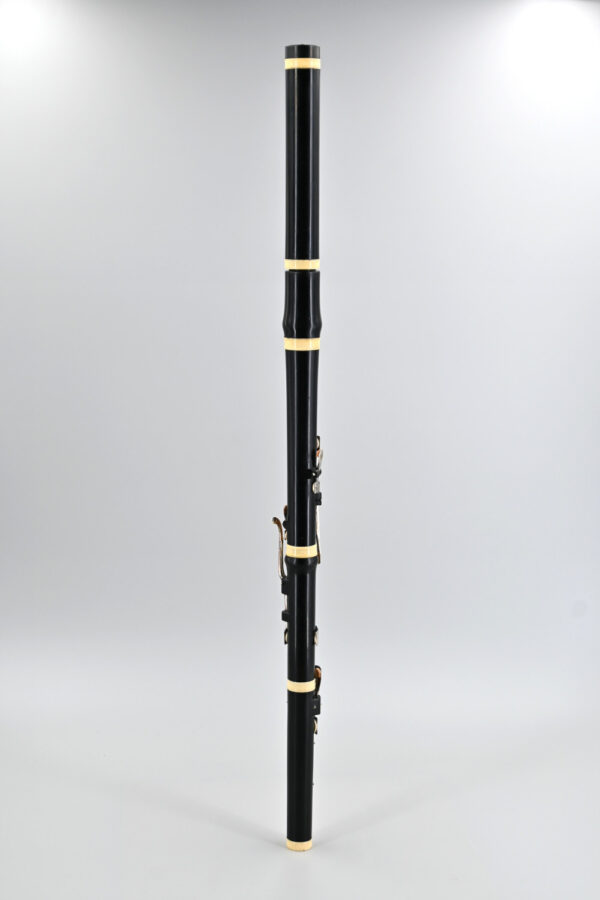
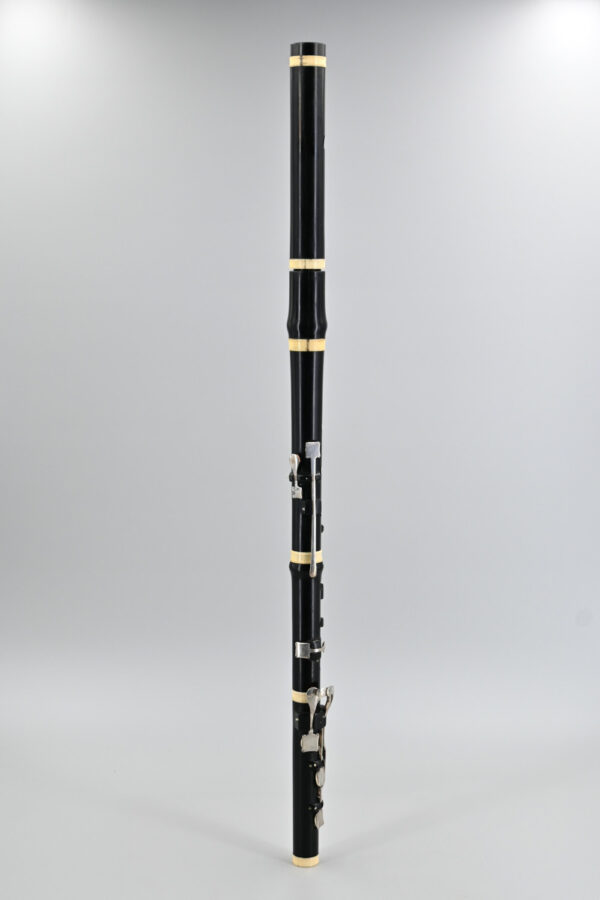
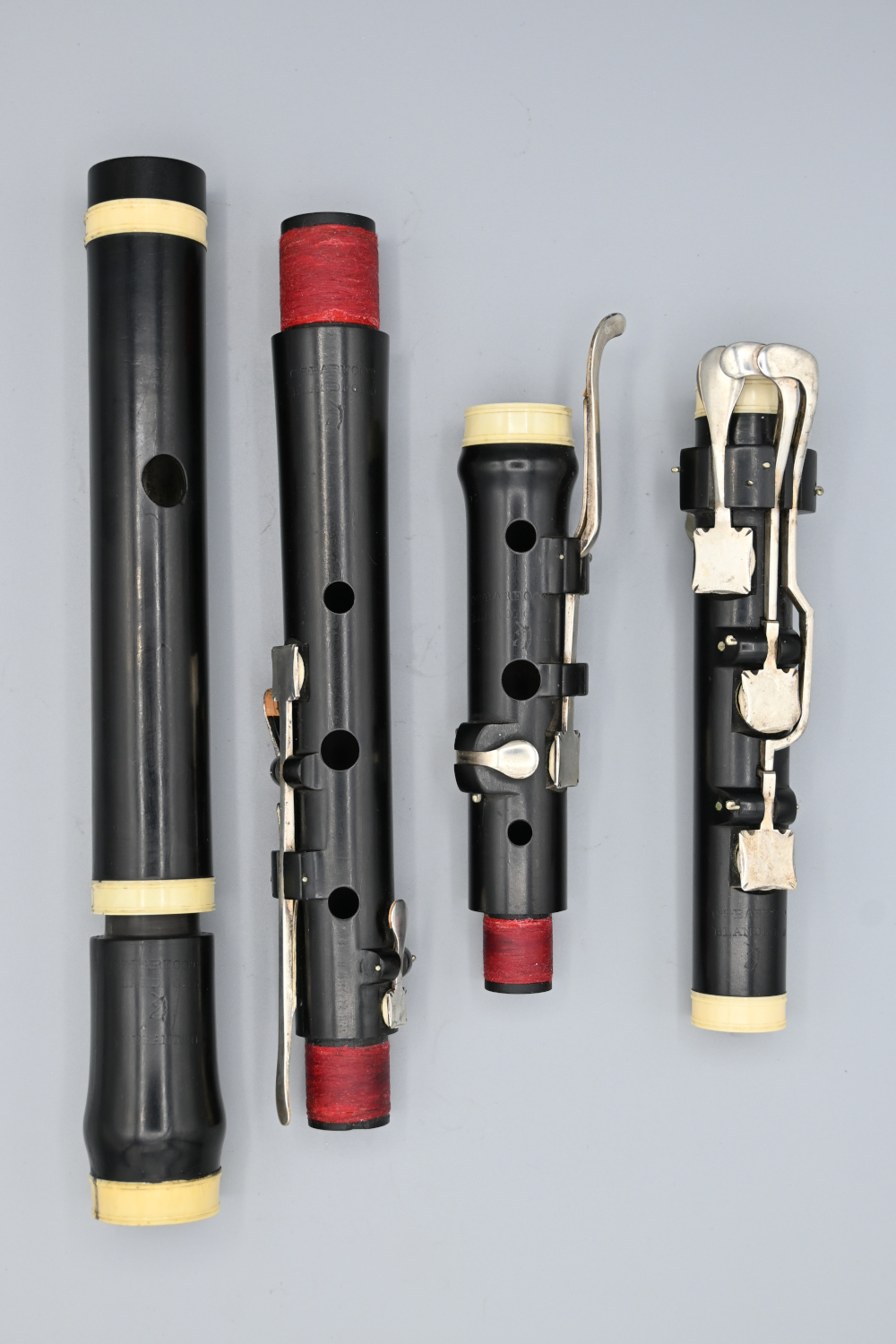
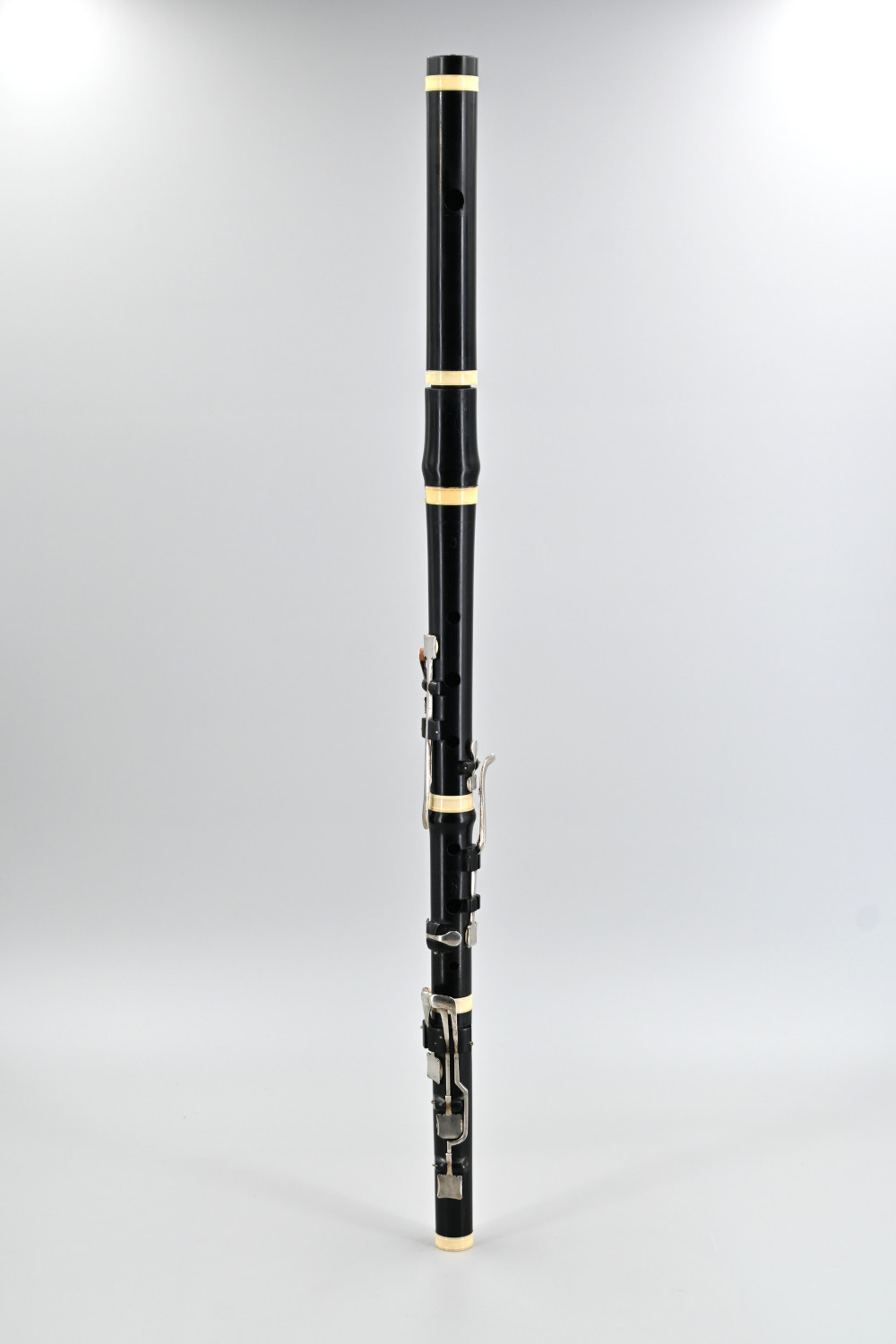
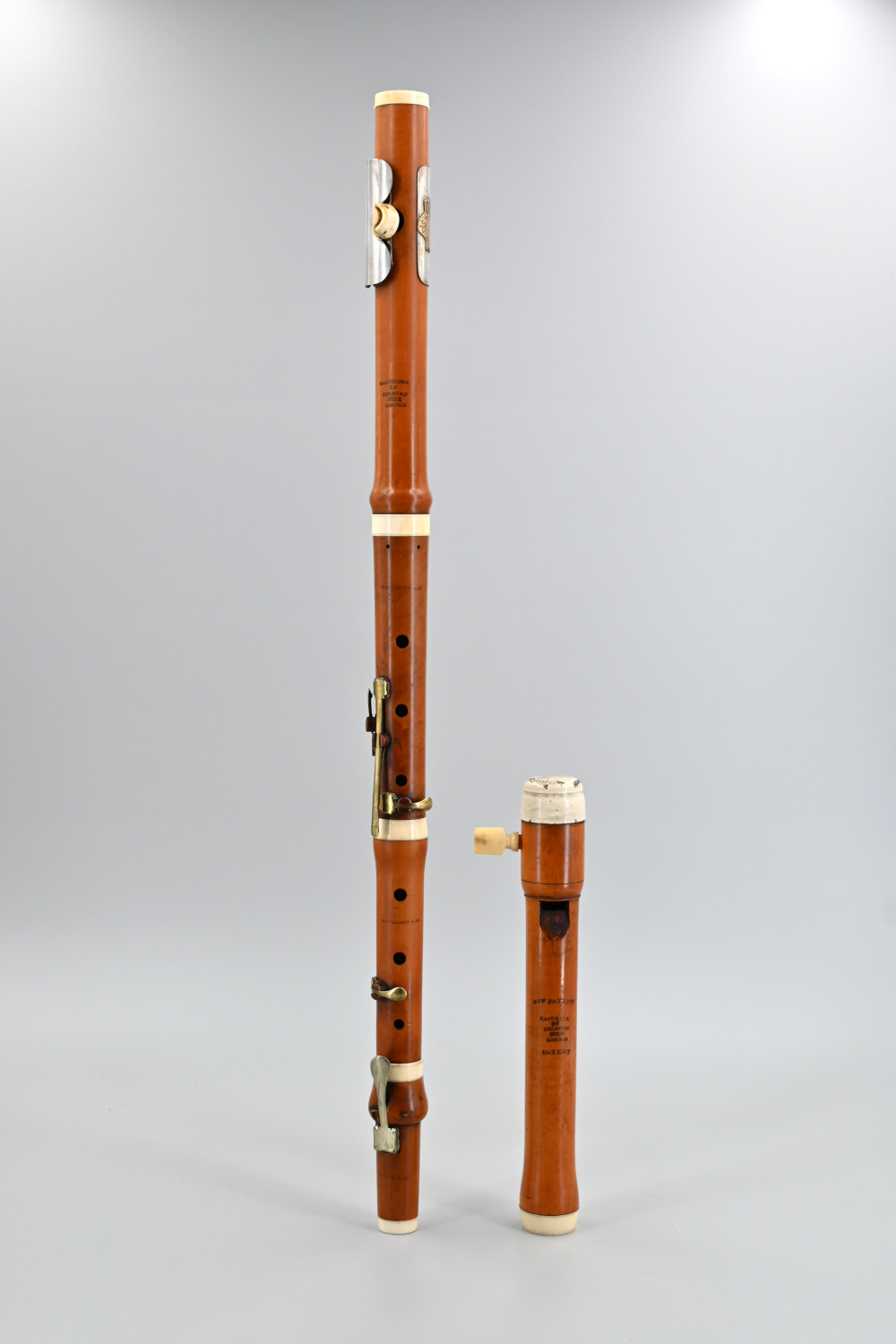
| Description | Eight-keyed, four-part ebony flute by C.S. BARFOOT |
| Materials | Ebony , silver, ivory |
| Dimensions | Total length 666 mm Sounding length 590 mm Weight 360 g |
| Condition | Working condition |
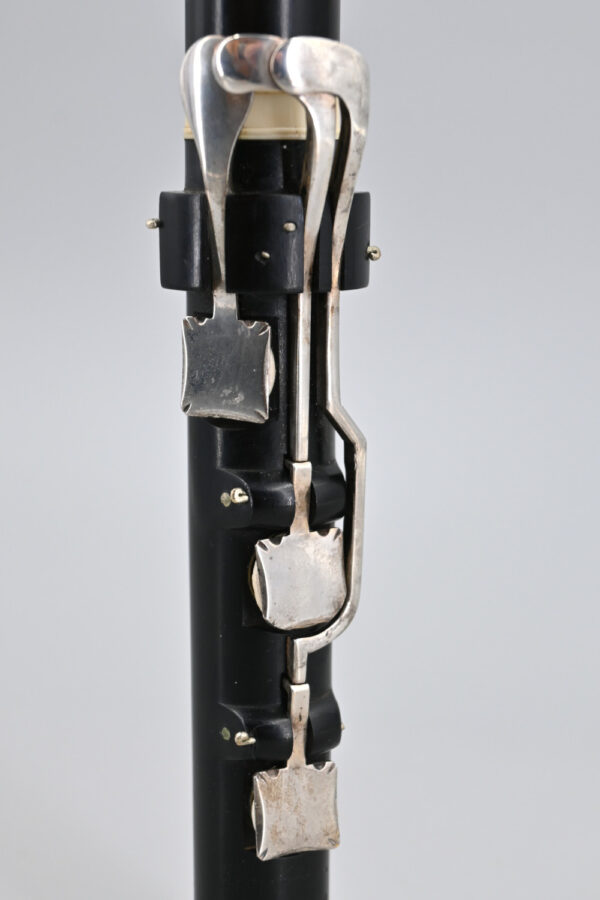
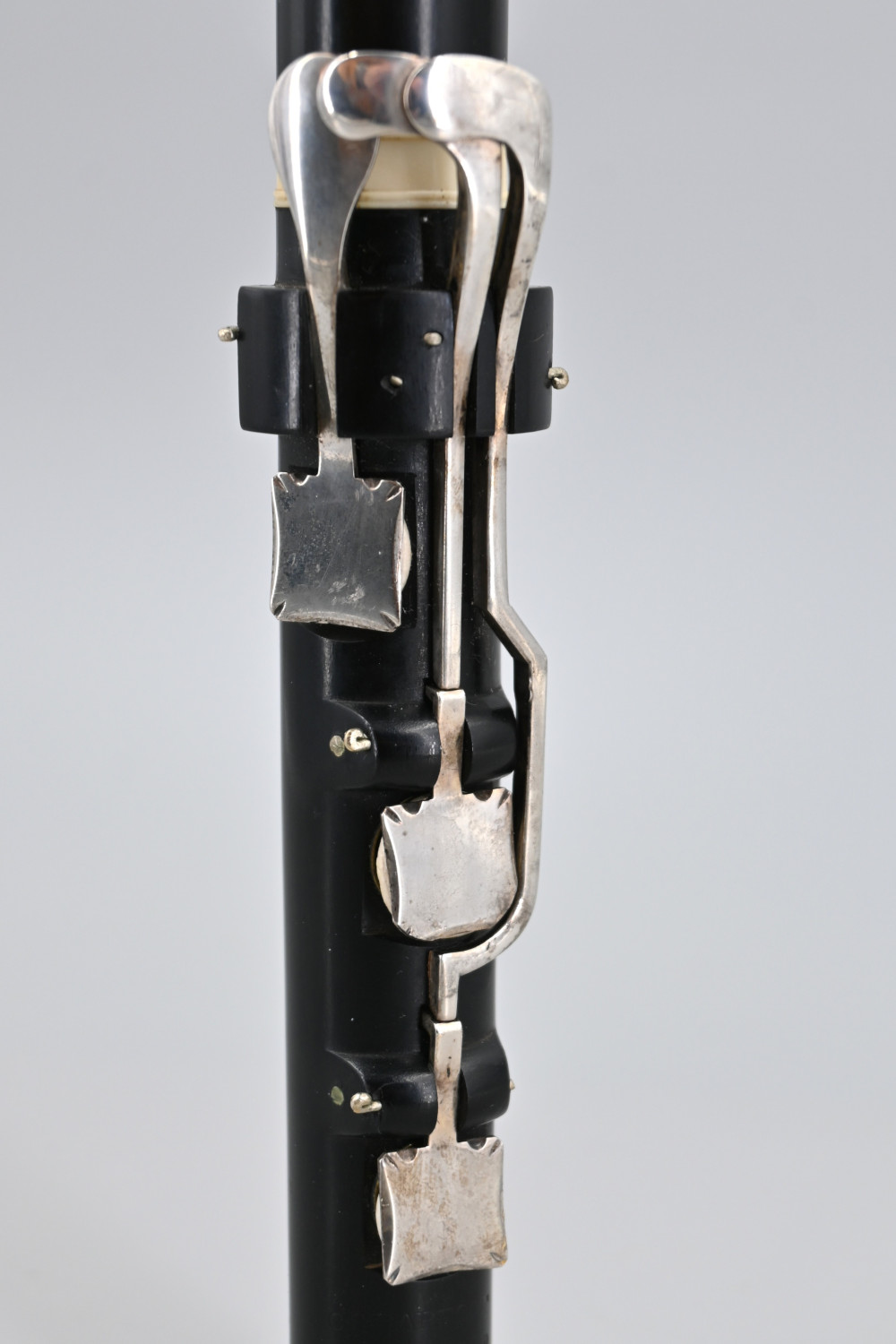
| Special features | Scalloped flat keys |
| Price (€) | €990.00 |
| Ref | 1321 |
- Description
- Enquiry
Description
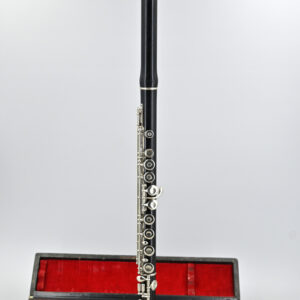
Ebony flute – C.S. BARFOOT
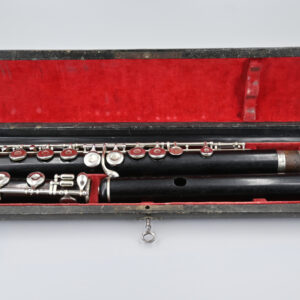
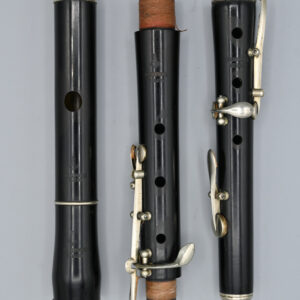
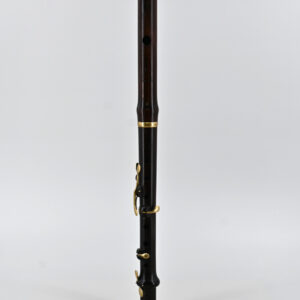
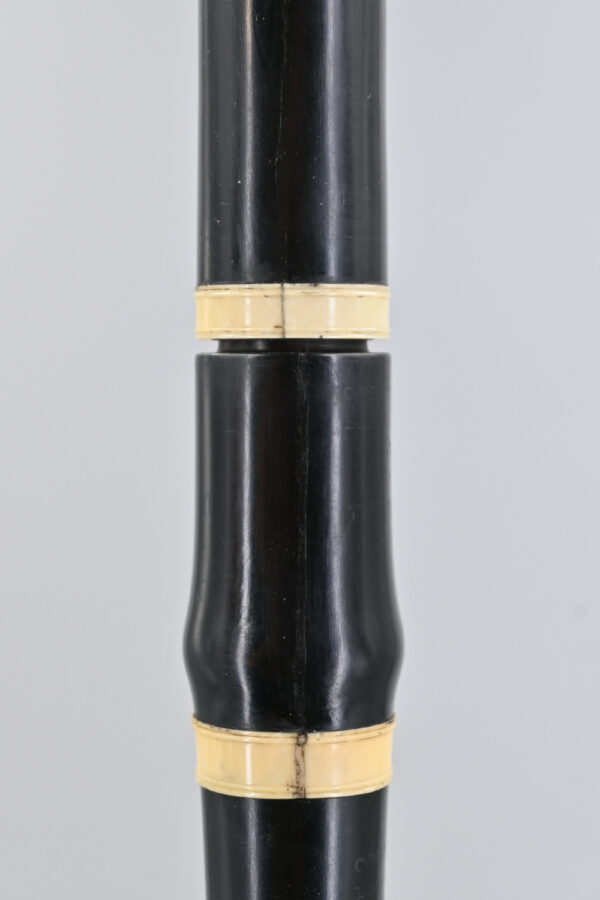
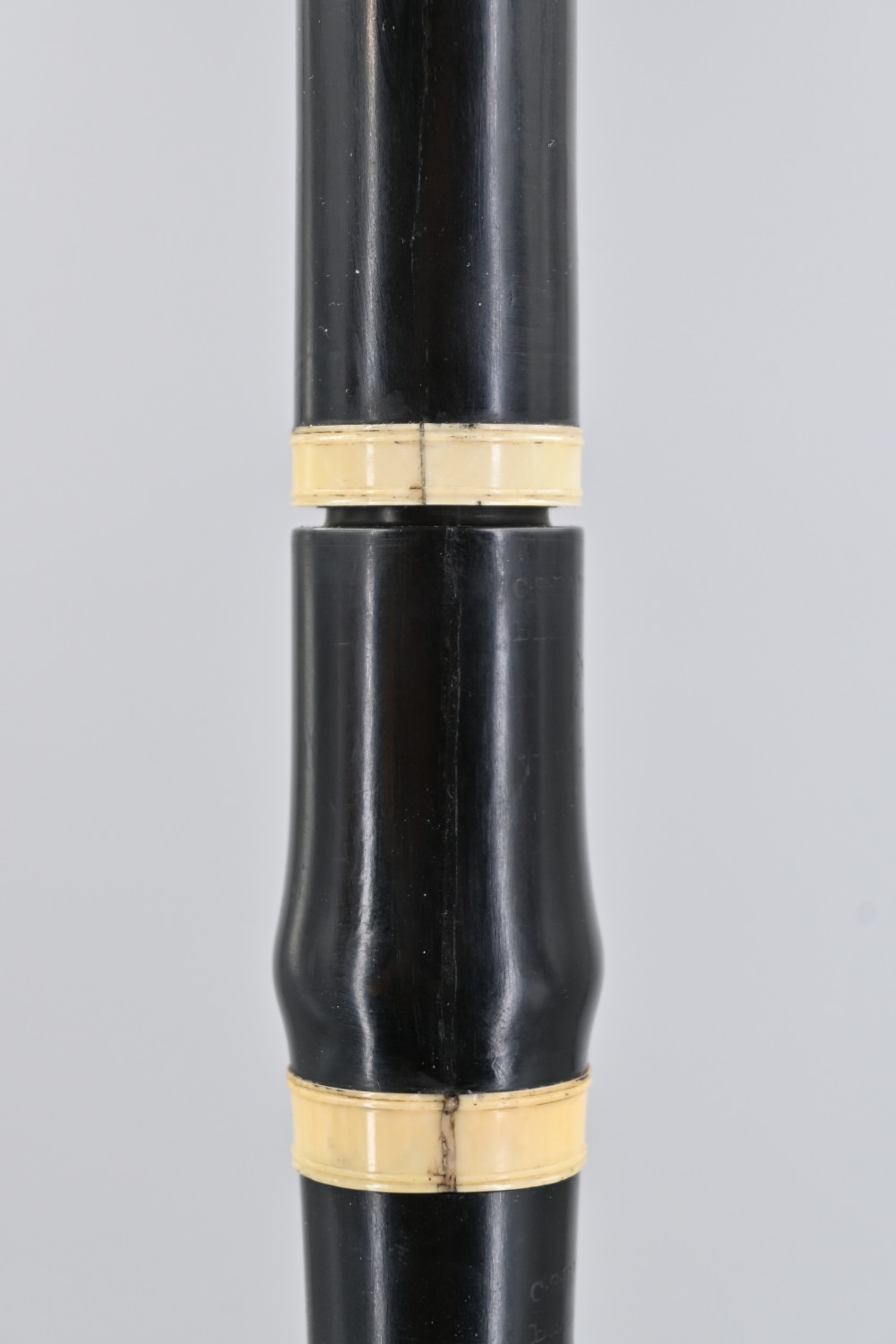
This four-part ebony flute with stunning silver keys and ivory rings and cap is stamped throughout with its maker’s name C.S. BARFOOT. The ebony is dark and luscious. The solid coin silver (unhallmarked) traditionally made flat keys are nicely scalloped. It is an early example of this maker’s flutes. The keyholes are fitted with brass inlays to aid sealing properly. It has a working tuning slide lined with metal. Its ivory screwcork is nicely made. We can say that it’s a typical English flute from the first quarter of the nineteenth century.
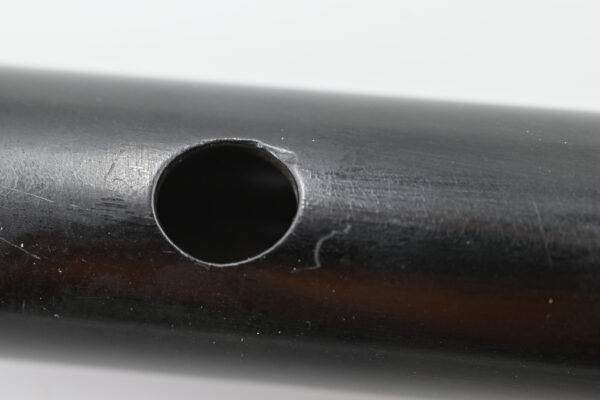
But looking further at the photos, we can see that this C.S. Barfoot flute has undergone some restoration work. This includes a long crack through the head joint which was glued. The crack is not through the embouchure hole – thank goodness!. There are also restored cracks to the barrel and ivory rings. The middle right-hand joint and foot joint do not present any cracks.
This flute is in working condition but needs some TLC on the head joint and possible padding adjustments. It plays at a pitch of a=440 Hz with the tuning slide 4 mm out.
show more Who was C.S. Barfoot? C for Charles and S for Smith, makes Charles Smith Barfoot (1778-1843). According to the Langwill Index, he was a music seller – well that’s exactly how he describes himself in his will. However, with a bit more digging, we discover that Charles Smith Barfoot was also a ‘Music Master’ or teacher who lived at White Cliff, Mill Street in Blandford. Blandford or Blandford Forum is a picturesque market town by the river Stour, in the county of Dorset, England. It seems that Charles Smith never married and when he died, he left a lump sum of money to two dressmaker sisters (Mary Ann and Sarah Elkins). Then his three brothers and one sister inherited the rest. We can therefore assume that he didn’t actually make this instrument… So, who did? It could have been any of the London makers of that time. We know there is a clarinet in the Edinburgh University Collection with C.S. Barfoot stamps and a W. MILHOUSE / LONDON stamp too. In the Royal College of Music collection, there is another clarinet, but this has a unicorn stamp… Astor, Bilton, Cramer, Gerock, Key, Miller, Henry Potter and Wolf also used the unicorn stamp on their instruments. Important note This instrument contains ivory. A certificate for the legal sale of this instrument within the European Union is supplied when purchased. show less